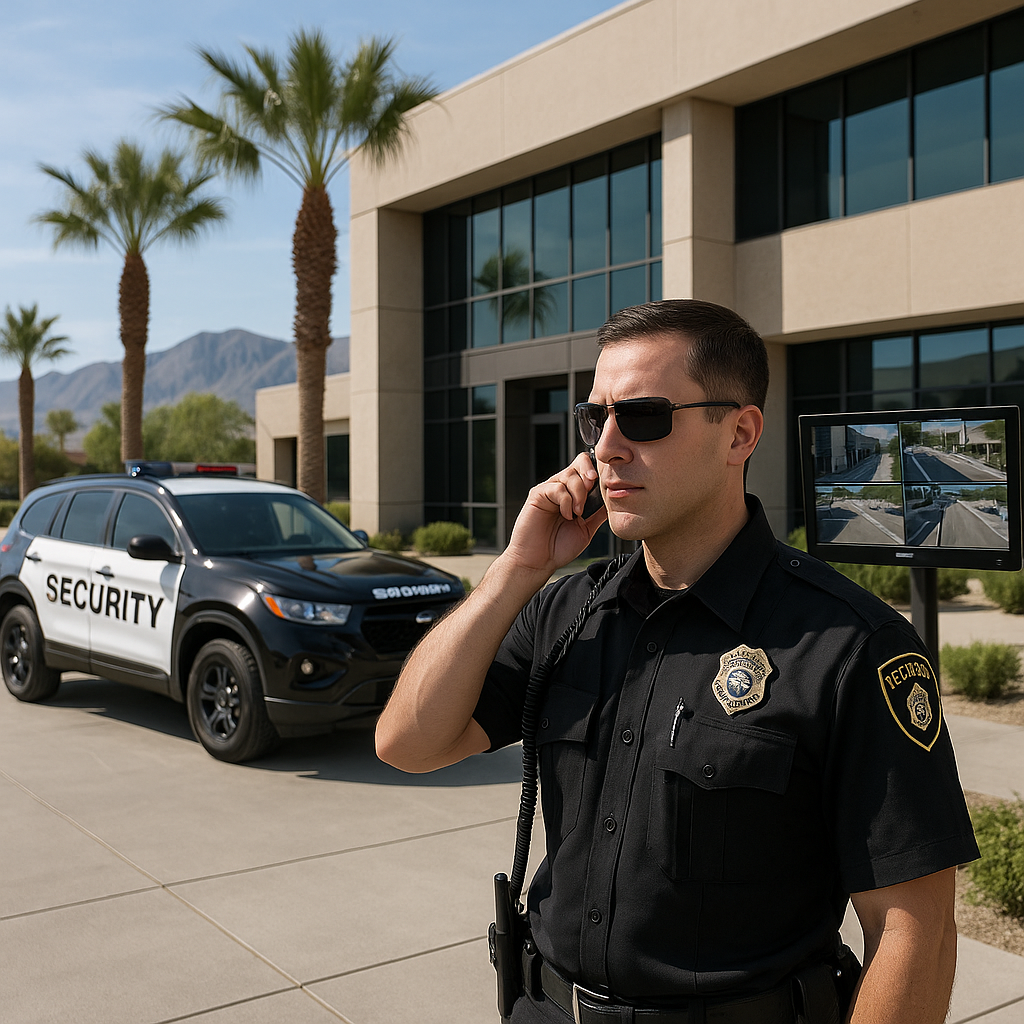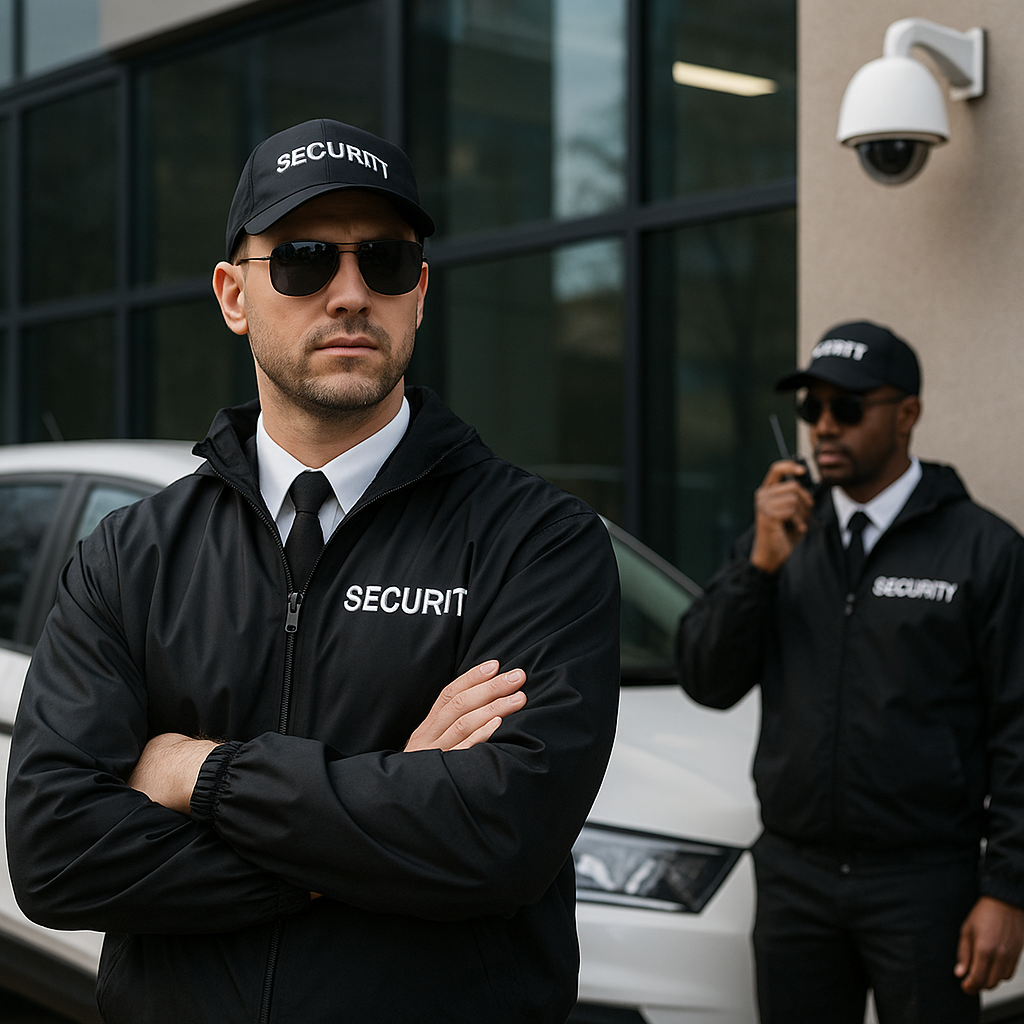
Palm Springs Downtown & Palm Canyon Drive Retail Theft Deterrence
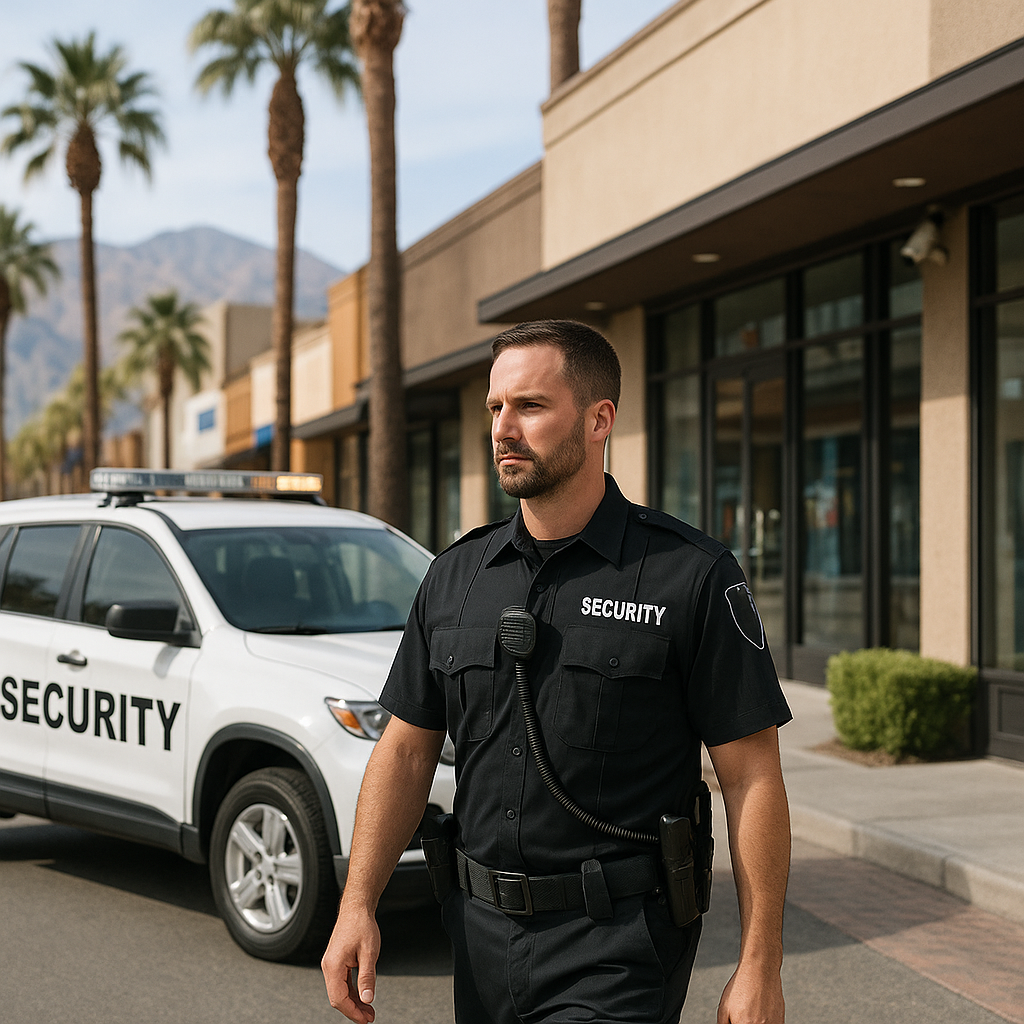
Palm Canyon Drive attracts steady pedestrian traffic, destination shoppers, tourists, and special event crowds. That environment creates sales opportunity, but it also increases vulnerability for boutiques, jewelry stores, art galleries, and luxury retail spaces. High foot traffic gives offenders cover, shortens staff reaction time, and allows stolen goods to disappear quickly into parked vehicles or surrounding crowds. Effective protection requires more than a warm body at the door. It requires strategy.
CSI Ceja Security Inc. (PPO #120360) protects commercial properties throughout the Coachella Valley and Southern California with a disciplined approach built on visible deterrence, customer-friendly officer presence, coordinated patrol coverage, and accurate incident documentation. For Palm Springs retailers, our security planning is designed to stop theft before it starts, support employees during incidents, and create a defensible record when law enforcement involvement becomes necessary.
Why Palm Canyon Drive Needs Specialized Retail Security
Palm Canyon Drive is not an ordinary shopping street. It combines tourist energy, premium storefronts, luxury merchandise, public visibility, and frequent event-related foot traffic. Those factors make it attractive to legitimate shoppers and highly attractive to thieves looking for speed, distraction, and resale value.
Organized retail crime groups target areas where they can blend in, test store staffing, and exploit hesitation. Solo shoplifters often rely on distraction, concealment, and fast exits. Smash-and-grab offenders look for easy access, weak display protection, limited visual deterrence, and delayed reporting. Each threat behaves differently, and each requires a tailored response.
Retailers on Palm Canyon Drive also face a brand challenge. Heavy-handed security can damage the atmosphere of a high-end shopping district. Weak security invites repeat loss. The right solution is a balanced program that keeps the environment welcoming while making the store clearly harder to victimize.
Top Threats Facing Palm Springs Retailers
Organized retail crime crews
These groups typically conduct surveillance before a theft. They watch staffing levels, identify camera blind spots, test employee awareness, and look for stores without a visible security presence. In many cases, one person distracts staff while others remove merchandise.
Grab-and-run shoplifting
Fast-entry thefts rely on surprise. Offenders move directly to high-value items, take what they can carry, and run before staff can react. Boutiques, perfume counters, designer accessories, and small electronics are especially vulnerable.
Smash-and-grab attacks
Jewelry stores and galleries are frequent targets because they display compact, high-value merchandise. Smash-and-grab incidents are often completed in seconds. Without trained on-site security, there is little chance to disrupt the act, preserve witness details, or establish an immediate chain of evidence.
Distraction theft and fitting-room loss
High-end apparel stores are routinely targeted through fitting room abuse, tag switching, receipt fraud, and team-based distraction techniques. These methods appear less dramatic than a forced entry incident, but over time they produce major inventory shrink.
Parking and perimeter risk
Retail crime does not start and end at the sales floor. Many suspects loiter outside, coordinate in parked vehicles, or test employee routines near side doors and service alleys. A strong mobile patrol services or foot patrol presence extends protection beyond the front entrance.
How Palm Canyon Drive Security Guards Reduce Retail Loss
Visible, professional officers remain one of the strongest deterrents against opportunistic theft and many forms of organized retail crime. The key is deployment. Security guards must be placed where they can influence behavior, support store staff, monitor entry and exit points, and react quickly without intimidating legitimate customers.
On Palm Canyon Drive, the most effective retail security programs combine entrance visibility, interior circulation, perimeter observation, and disciplined reporting. A static posture alone is not enough. A purely undercover approach is also not enough. High-traffic luxury retail needs layered protection.
Visible deterrence at the entrance
A uniformed officer at the entrance changes offender decision-making immediately. Thieves look for low-friction environments. A trained guard who acknowledges arrivals, scans hands and bags, notices suspicious clustering, and remains alert at the threshold adds friction without disrupting business.
Interior awareness and circulation
Guards assigned to luxury retail must do more than stand still. They should circulate with purpose, observe merchandise zones, monitor fitting room traffic where appropriate, and maintain line of sight to vulnerable displays. Strategic movement prevents offenders from confidently identifying blind spots.
Fast response to suspicious behavior
Retail theft indicators often appear before the act occurs. Security officers trained to identify pacing, oversized bags, coordinated entry, lookout behavior, repeated shelf handling, and unnatural staff diversion can alert management early and shift from passive observation to active deterrence.
Support for law enforcement reporting
When a crime does occur, the value of a professional officer extends beyond immediate response. Accurate suspect descriptions, direction of travel, vehicle details, time stamps, witness names, and preserved video references can significantly strengthen follow-up by Palm Springs Police.
Standing Retail Guards vs. Loss Prevention Officers
Retailers often ask whether they need standing security guards, loss prevention officers, or both. The answer depends on merchandise type, store layout, foot traffic, and the expected threat profile. For high-end fashion, jewelry, and art galleries, the distinction matters.
Standing retail guards
Standing guards are overt, visible, and highly effective at deterrence. Their main value is prevention through presence. They influence customer and offender behavior the moment someone approaches the storefront.
For Palm Canyon Drive boutiques and galleries, standing guards are ideal when the objective is to reduce opportunistic theft, discourage grab-and-run attempts, reassure employees, and project a controlled environment. They also support opening and closing procedures, monitor package movement, and manage after-hours vendor access.
Loss prevention officers
Loss prevention officers focus more heavily on surveillance, pattern recognition, internal theft concerns, evidence development, and investigative observation. They may work in plain clothes or in low-profile roles. Their value is strongest when a retailer has recurring concealment theft, refund fraud, employee theft, fitting-room abuse, or known repeat offenders.
Loss prevention personnel are not a substitute for visible deterrence in high-risk luxury environments. They are a complement to it. Plainclothes observation may identify a theft pattern, but it does not create the immediate psychological barrier that a uniformed officer provides at entry.
Best use case for high-end fashion
Luxury apparel stores benefit from a hybrid model. A visible front-of-house security presence sets the tone, while trained loss prevention functions address fitting rooms, concealment methods, tag switching, and coordinated distraction. This combination protects merchandise without making the store feel hostile.
Best use case for jewelry stores
Jewelry retailers need strong visible security first. The risk is too high and the merchandise is too portable. Standing guards positioned at entry and near key display zones are essential. A plainclothes component can add investigative value, but jewelry protection must begin with overt deterrence and immediate response capability. In higher-threat settings, some retailers may require armed security guards based on a formal risk assessment.
Best use case for art galleries
Art galleries require a more nuanced atmosphere, but security must still be unmistakable. A polished, customer-friendly officer can blend hospitality with surveillance. Gallery owners benefit from visible protection during receptions, installation changes, private showings, and periods of heavy tourist traffic. For large openings or collector events, dedicated event security services can add controlled access and crowd monitoring.
Greeting and Deterrence Techniques That Deter Thieves Without Hurting Sales
Professional retail security is not about creating tension. It is about controlling the environment with confidence, courtesy, and consistency. The best officers know how to greet every guest in a way that feels welcoming to legitimate shoppers and uncomfortable to would-be thieves.
Immediate acknowledgment at entry
Every customer should be acknowledged within seconds of entering. A simple, polished greeting tells honest shoppers they are welcome and tells offenders they have been seen. This removes anonymity, which is one of the biggest advantages a thief wants.
Examples include: “Good afternoon, welcome in,” “Let us know if you need assistance,” or “Thanks for visiting today.” The delivery matters. It must be professional, natural, and confident.
Eye contact and positional awareness
Strong eye contact signals attentiveness. Guards should position themselves to observe hands, carried items, and entry patterns without blocking the doorway. The goal is to create awareness, not confrontation.
Visible movement, not pacing
Officers should circulate deliberately instead of nervously pacing. Random, purposeful movement across the entrance zone, display sight lines, and key pathways makes it harder for suspects to predict observation patterns. It also reassures customers that the security presence is active and competent.
Customer-service-first engagement
When someone lingers unusually, repeatedly scans staff, or approaches a vulnerable display, the best first move is often service-oriented engagement. “Can I help you find something?” is both a customer service gesture and a deterrence tactic. It interrupts planning, forces verbal interaction, and increases the offender’s perception of exposure.
Non-accusatory proximity
Many theft attempts can be disrupted simply by reducing distance. If behavior escalates, a guard can remain nearby, maintain a professional demeanor, and continue monitoring while notifying staff. Presence alone often causes suspects to abandon the attempt.
Coordinated staff communication
Greeting and deterrence work best when officers and employees operate as one team. Staff should know how to quietly alert security, identify vulnerable merchandise zones, and respond if a suspicious group enters. Short radio messages, discreet code phrases, and preplanned positions make the response seamless.
Farewell observation at exit
The exit greeting matters too. A simple “Have a great day” paired with a professional visual check reinforces that movement out of the store is also being observed. It remains courteous while supporting accountability.
Commercial Foot Patrol for High-Traffic Corridors
Palm Canyon Drive security guards, retail security Palm Springs, shoplifting prevention Coachella Valley, commercial foot patrol strategies are most effective when protection extends beyond one doorway. Along a high-traffic corridor, suspects often test multiple storefronts, move between businesses, and coordinate with others outside. This is where commercial foot patrol becomes essential.
Foot patrol officers increase visibility across a wider retail zone. They observe sidewalk behavior, identify loitering, monitor repeated pass-bys, and spot lookout vehicles or suspicious staging before a theft occurs. Unlike a static guard, a foot patrol officer influences the corridor itself.
Benefits of commercial foot patrol
First, it disrupts offender reconnaissance. Criminals prefer time and anonymity to study a target. Patrol presence reduces both. Second, it allows faster information sharing between neighboring retailers. If one store experiences suspicious activity, patrol can immediately warn nearby businesses.
Third, commercial foot patrol strengthens employee safety during opening, closing, bank deposits, and trash runs. Fourth, it improves the customer experience by adding a visible safety presence in parking areas, sidewalks, and common approach points.
Ideal deployment model
For Palm Canyon Drive, a layered approach works best. One officer may be assigned to a storefront while another handles periodic corridor patrol. For shopping clusters, scheduled patrol intervals can be supplemented with targeted stops during peak tourism periods, evenings, and event weekends.
Businesses that need broader support can combine foot patrol with unarmed security officers inside the store and vehicle-based patrol around surrounding lots or service access areas. This creates overlapping observation zones that are difficult to exploit.
Incident Response During Shoplifting and Smash-and-Grab Events
Retail crime response must be immediate, calm, and policy-driven. Untrained reactions can increase injury risk, create liability, and damage evidence quality. Professional officers follow defined response protocols designed to protect life first, then preserve facts.
Initial action priorities
The first priority is employee and customer safety. Officers create distance from weapons or dangerous behavior, direct people away from the threat area, and notify management. If suspects flee, the focus shifts to observation, broadcast-ready suspect details, and direction of travel.
Critical details to capture
Useful information includes suspect count, gender presentation, clothing, tattoos, masks, gloves, bags used, tools used, statements made, point of entry, path through the store, merchandise taken, and escape direction. Vehicle make, model, color, partial plate, and waiting driver behavior are especially valuable in organized theft cases.
Scene preservation
After a smash-and-grab, the scene should be protected. Broken glass, forced display damage, discarded tools, and abandoned packaging may all have evidentiary value. Security officers help prevent contamination while management secures video and inventory records.
Incident Reporting Software and Palm Springs PD Workflows
Strong security programs do not end when the suspect leaves. Fast, accurate documentation is what turns a chaotic theft event into an actionable case file. CSI Ceja emphasizes structured incident reporting software workflows so retailers can file quick police reports with Palm Springs PD and preserve critical details while they are still fresh.
Step 1: Real-time incident entry
Immediately after the scene is stabilized, the officer creates a digital incident entry through reporting software on a mobile device or designated workstation. Core fields should include exact time, store location, reporting officer, involved employees, incident type, and whether Palm Springs Police was contacted.
Prebuilt dropdowns reduce delay and improve consistency. Officers can quickly classify the event as shoplifting, organized retail crime, vandalism, trespassing, assaultive behavior, or smash-and-grab burglary-related loss, depending on circumstances.
Step 2: Suspect and event narrative
The next step is a concise, factual narrative. Good reporting software prompts officers to document chronological actions: suspect entry, behavior observed, employee engagement, merchandise targeted, concealment or force used, statements made, exit method, and direction of travel. Narratives must avoid speculation and stick to observed facts.
Step 3: Photo, video, and evidence references
Officers then attach or reference supporting materials. That includes still images from CCTV, screenshots of suspect movement, photos of damaged cases, and notes identifying camera numbers or time stamps. If immediate file upload is not possible, the report should still document where the footage is stored and who controls it.
Step 4: Loss valuation and merchandise detail
Police reports are stronger when merchandise descriptions are specific. The reporting workflow should capture SKU numbers, item descriptions, serial numbers where available, quantity, estimated retail value, and whether the products are one-of-a-kind, consigned, or insured. This is especially important for jewelry and gallery inventory.
Step 5: Witness and staff statements
Effective software allows short witness summaries and separate employee statement attachments. Staff observations often fill critical gaps, especially if one employee noticed pre-incident surveillance or recognized repeat subjects from prior visits.
Step 6: Palm Springs PD notification log
The report should include the exact time Palm Springs PD was contacted, the method used, the name or badge number of responding personnel if available, and any incident or call reference number provided. This creates a clean bridge between private security records and the official police report process.
Step 7: Supervisor review and export
Before final submission, a supervisor reviews the report for clarity, completeness, and evidentiary value. The software should allow export to PDF or a law-enforcement-ready summary that management can provide to officers or investigators quickly. Time matters. The faster complete information is assembled, the stronger the chance of meaningful follow-up.
Step 8: Trend tracking and repeat offender analysis
The best incident reporting platforms do more than archive events. They identify patterns. Retailers can track repeat suspect descriptions, common days and times, targeted merchandise categories, and correlated vehicle information. Over time, this turns isolated incidents into actionable intelligence.
For multi-site retailers or corridor-wide business groups, trend analysis is especially valuable. It supports staffing decisions, patrol adjustments, and improved coordination between neighboring businesses.
Staff Training and Security Coordination
Security programs fail when store teams are unsure what to do. Retail employees should know how to recognize suspicious behavior, when to contact security, how to preserve evidence, and what not to say during a developing incident. Training does not need to be complex, but it must be consistent.
Key employee training topics
Employees should be trained on concealment indicators, distraction techniques, fitting room warning signs, and group theft behavior. They should also understand emergency communication methods, safe observation limits, and post-incident responsibilities like securing receipts, inventory counts, and camera footage.
Management coordination
Managers should meet regularly with the assigned security team to review incident trends, staffing schedules, merchandise changes, and special event risks. Security deployment should evolve with the business. A static plan for a changing threat environment is ineffective.
Retailers with broader community concerns can also benefit from security lessons used in commercial property protection programs and best practices drawn from hospitality and residential access control models.
Why Local Experience Matters in Coachella Valley Retail Security
Palm Canyon Drive security guards, retail security Palm Springs, shoplifting prevention Coachella Valley, commercial foot patrol planning is more effective when handled by a company that understands local traffic, seasonal tourism, event surges, and the expectations of luxury-oriented businesses. Coachella Valley security is not a one-size-fits-all service.
CSI Ceja Security Inc. knows the region, the customer base, and the operational realities of protecting commercial properties in Palm Springs and surrounding cities. Businesses looking for area-specific service can learn more about our coverage in Palm Springs and throughout the valley, including Palm Desert and nearby communities.
Our officers are deployed with clear post orders, professional appearance standards, communication protocols, and reporting expectations. We do not guess at retail protection. We build visible, accountable, and responsive security operations that match the property’s risk profile and brand image.
Why CSI Ceja Is the Right Security Partner
Retail theft prevention is not just about stopping one incident. It is about reducing repeat exposure, strengthening employee confidence, supporting law enforcement documentation, and protecting the reputation of the business. That requires a professional security partner with real operational discipline.
CSI Ceja Security Inc. provides licensed security services designed for commercial properties that cannot afford ineffective coverage. Our team develops practical, site-specific plans for storefront deterrence, corridor patrol, opening and closing security, incident reporting, and emergency response escalation.
For retailers, galleries, and luxury businesses facing elevated theft concerns, we provide the structure needed to harden the target without compromising the shopping experience. From visible officer presence to accurate reporting workflows, our approach is built to produce measurable results.
Frequently Asked Questions
What is the best security option for a Palm Canyon Drive boutique?
For most boutiques, the best solution is a visible standing guard combined with active floor awareness and clear employee communication protocols. Stores with repeat theft issues may also benefit from a loss prevention component for investigative observation.
Are standing guards better than loss prevention officers for jewelry stores?
Yes, in most jewelry environments visible standing guards are the first priority because overt deterrence is critical. Loss prevention officers can add value, but jewelry security must begin with immediate presence, controlled access awareness, and fast incident response.
How does commercial foot patrol help prevent shoplifting?
Commercial foot patrol extends deterrence beyond one storefront. It helps identify suspicious loitering, repeat pass-bys, lookout vehicles, and coordinated groups moving between businesses, all of which are common indicators of organized retail crime activity.
Can security guards help with Palm Springs PD reporting after a theft?
Absolutely. Professional guards can document timelines, suspect descriptions, witness names, merchandise details, video references, and direction of travel. That information helps management file faster, more complete reports with Palm Springs PD.
How can security remain welcoming in a luxury retail environment?
The right officer uses greeting and deterrence techniques that combine courtesy with alertness. Immediate acknowledgment, polished customer interaction, strategic movement, and non-accusatory observation create a safe, upscale environment while discouraging theft.
Ready to Protect Your Property?
Contact CSI Ceja Security Inc. today for a free security consultation. Our licensed professionals are ready to create a custom security plan for your needs.
Request a Free QuoteCSI Ceja Security Inc. (PPO #120360)
760-972-0000 | info@csiceja.com | csiceja.com