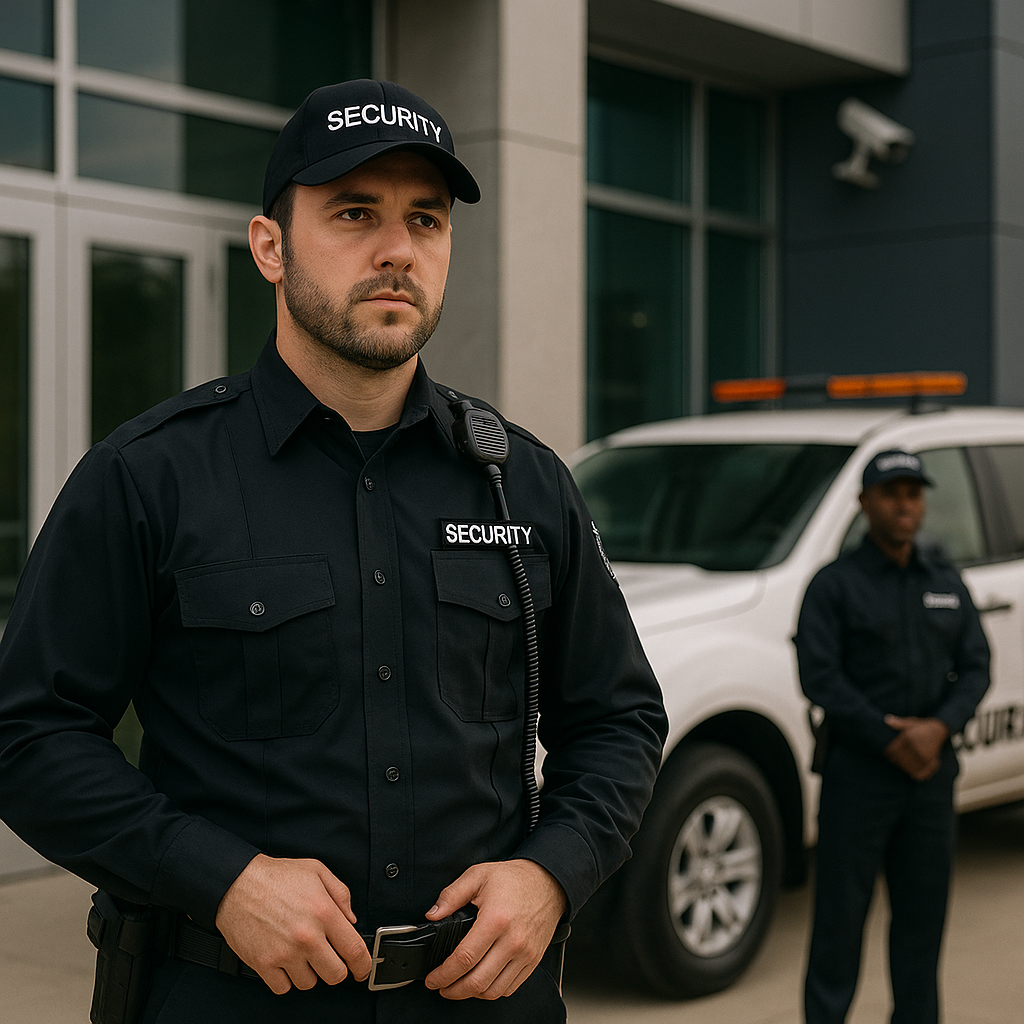
California Cannabis Security Compliance: Safeguarding Dispensaries, Facilities

California Cannabis Security Compliance
For licensed operators, cannabis security guard services california are not just a nice extra. They are part of the compliance framework that protects your inventory, employees, customers, and your state license. In California, the Department of Cannabis Control (DCC) and California Code of Regulations Title 4 set strict rules for guards, cameras, alarms, access control, and transport. A single gap in your security plan can trigger citations, business interruptions, or even license revocation.
At CSI Ceja Security Inc. (PPO #120360), we help cannabis businesses understand what regulators expect and how to build security programs that are practical, documented, and inspection-ready. This guide breaks down the core requirements in simple terms so dispensary owners, cultivators, manufacturers, and distributors can make informed decisions. If you operate in Palm Desert, Palm Springs, Coachella, or across Southern California, the same lesson applies: security compliance must be active every day, not only when an inspection is scheduled.
DCC Title 4 Security Mandates: What Regulators Expect
California cannabis rules treat security as a condition of licensure. That means your security plan is not just an internal document. It is part of what allows your business to operate legally.
The DCC expects cannabis businesses to maintain systems that deter theft, restrict unauthorized access, preserve evidence, and support safe operations. Inspectors do not only ask whether you have a guard or camera. They want to see whether your systems match the approved plan, work correctly, and produce records when requested.
Why compliance matters so much
Cannabis remains a high-risk industry because of cash handling, controlled inventory, and strict chain-of-custody rules. Regulators know that weak security can lead to diversion, robbery, employee misconduct, and public safety concerns. That is why even small failures can bring serious consequences.
A nonworking camera, an unescorted visitor, or an unqualified guard can signal to an inspector that the entire site is not being controlled properly. When that happens, operators may face corrective action plans, fines, temporary shutdowns, or threats to their license status.
Main security pillars under Title 4
While each license type has different operational details, the core security pillars are consistent. Most businesses need to address on-site guards, 24/7 surveillance, limited-access controls, alarm monitoring, visitor logging, and secure transport procedures.
In practice, compliance means your people, policies, and equipment all need to work together. A camera system alone is not enough if no one checks retention. A guard alone is not enough if post orders do not match DCC requirements. Strong compliance comes from a complete security program.
Why Cannabis Security Guard Services California Operators Rely On Matter
Not all security staffing meets California cannabis requirements. This is one of the biggest mistakes new operators make when searching for cannabis security guard services california. They assume any guard company can fill the role, but cannabis regulations are more specific than general commercial security needs.
The right provider must understand DCC expectations, BSIS rules, emergency procedures, and the daily flow of a cannabis facility. Guards in this industry are not just standing at a door. They are part of your compliance system and your documentation trail.
Security is both protection and proof
A qualified guard helps deter crime in real time. Just as important, that guard provides documented proof that your business had proper protection during operating hours.
If there is an inspection, incident, or claim, post logs, incident reports, escort records, and access observations all become valuable evidence. This is one reason experienced operators prefer trained security teams over basic contract labor.
Different cannabis facilities have different risks
A retail dispensary deals with customer screening, age verification, cash exposure, and point-of-sale visibility. A cultivation site may focus more on perimeter control, employee access, and after-hours intrusion risks. A distribution hub must protect loading areas, manifests, and chain-of-custody procedures.
Because the risks are different, post orders should be customized to the property and license type. At CSI Ceja, we build site-specific instructions rather than using a generic one-page security checklist.
4 CCR § 15045 Guarding Obligations: The 21+ Age and BSIS Requirement
One of the clearest cannabis security rules applies to retail premises. Under 4 CCR § 15045, security personnel assigned to retail operations must be at least 21 years old and hold a valid California Guard Card issued by the Bureau of Security and Investigative Services (BSIS).
This requirement alone disqualifies many standard security staffing models. Some companies commonly assign 18-year-old guards to entry posts in other industries. That approach can create immediate compliance problems for cannabis operators.
What regulators are looking for
Inspectors want to confirm that the guard on site is legally qualified for the assignment. That means active BSIS registration, proper age, and assignment to the licensed premises during operational hours. If your site should have a guard and no one is present, that is a major red flag.
Operators should also keep internal records showing who was assigned, what hours were covered, and what duties were performed. Good staffing records support your compliance position during inspections or disputes.
Core guard responsibilities at cannabis retail sites
Guard duties in cannabis retail go beyond basic presence. They usually include age and ID verification, entry management, de-escalation, incident observation, and immediate response to suspicious behavior.
Guards may also support controlled access between public areas and limited-access zones. If a delivery arrives, if cash must be moved, or if a vendor enters a sensitive space, the guard helps make sure procedures are followed.
Age and ID verification
A cannabis guard often serves as the first point of compliance at the entrance. They help prevent unauthorized minors from entering the retail sales area and support your staff in confirming lawful customer access.
This job seems simple, but it is critical. A weak front-door process can expose the business to regulatory and reputational harm within minutes.
Access enforcement and anti-tailgating
Limited-access zones must stay limited. Guards help stop tailgating, where one person follows an authorized employee into a restricted area without proper approval.
They also watch for employees or contractors moving between zones in ways that violate procedure. In cannabis operations, access control failures can raise questions about diversion and chain-of-custody integrity.
Cash, delivery, and loading area escorts
Cannabis businesses often move cash, product, or both in predictable patterns. Those moments create risk because they draw attention to vulnerable handoff points such as side doors, vault routes, and loading bays.
Trained guards help secure these transitions. They can observe surroundings, control access, document the movement, and coordinate with management if a threat appears.
Visible deterrence
A professional guard post discourages theft attempts before they start. Organized retail criminals and opportunistic offenders often look for easy targets, blind spots, or inconsistent staffing.
When a property has clear procedures, a visible security presence, and active monitoring, many threats are reduced before they escalate. That preventive value is one reason retail operators invest in dedicated unarmed security officers and, when justified by risk, armed security guards.
Video Surveillance Compliance: Avoiding the 90-Day Retention Trap
Video surveillance is one of the most heavily reviewed parts of cannabis compliance. Under 4 CCR § 15044, businesses must maintain continuous 24/7 video recording at a minimum resolution of 1280x720 and 15 frames per second, with footage retained for at least 90 days.
This sounds straightforward, but many operators fail on the storage side. They install cameras, confirm that images look good on day one, and then discover too late that their system overwrites footage after 30 or 60 days.
What cameras must capture
Your surveillance system should cover all points of ingress and egress from interior and exterior angles. It should also capture point-of-sale areas clearly enough for facial recognition and transaction review.
In addition, cameras should monitor storage rooms, packaging areas, weighing areas, loading zones, and the room containing security recording equipment. Inspectors want to know that both activity and potential tampering can be reviewed later.
The 90-day retention problem
One of the most common audit failures happens when storage is undersized. A system may technically record continuously, but if the archive loop is too short, required footage is lost before anyone notices.
Consumer-grade cloud plans and unmanaged DVR or NVR systems are frequent problems. Businesses should verify actual retention performance based on camera count, resolution, frame rate, and recording mode rather than relying on assumptions.
How to avoid this trap
Start by documenting your camera inventory and current storage capacity. Then calculate whether your system truly supports 90 days of continuous recording at the required quality level.
Next, assign a manager or security lead to conduct periodic retention checks. Do not wait for an inspection to discover that footage from 75 days ago is unavailable.
Lighting, angles, and blind spots
Even if your retention is correct, poor placement can still cause violations. Cameras must be permanently mounted and positioned to identify faces, hands, transactions, and entry events clearly.
Walk the property during daylight and after dark. Loading areas, back hallways, parking edges, and dumpster corridors are common places where glare, shadows, or obstructions reduce usable evidence.
Why surveillance review procedures matter
Compliance is not only about recording. It is also about being able to retrieve and preserve footage when needed.
Your team should know who has access to recordings, how footage is exported, how evidence is stored, and how requests are documented. If law enforcement, insurance carriers, or regulators ask for footage, delays and confusion can make a bad event worse.
Limited-Access Zoning and Digital Visitor Tracking (4 CCR § 15042)
Under 4 CCR § 15042, areas where cannabis is stored, handled, weighed, packaged, or processed must be designated as limited-access areas. These spaces are not open zones. They must be protected physically and procedurally.
For many operators, this is where compliance shifts from general security to true operational discipline. It is not enough to say employees know where they should and should not go. Access rules must be enforced and documented.
What a limited-access area means
A limited-access area is any space where cannabis inventory or cannabis products are present and where access should be restricted to authorized personnel. Typical examples include vaults, back stock rooms, trim rooms, processing lines, packaging stations, and secure receiving areas.
These zones should be clearly identified in your floor plan and security plan. Staff should understand exactly which doors and boundaries mark the start of restricted access.
Commercial-grade locking mechanisms
DCC expectations call for commercial-grade, non-residential locking systems on these restricted areas. In practice, many businesses use electronic access control such as RFID credentials, keypad PIN systems, or biometric readers.
The goal is not only to keep outsiders out. It is also to create a reliable record of who entered, when they entered, and whether access was authorized.
Why digital access logs help
Digital logs are valuable because they create an audit trail. If inventory goes missing, if an inspector asks who entered a room, or if an incident occurs during a shift, electronic records help management reconstruct events quickly.
Manual keys provide less visibility and are harder to control. If a key is copied, lost, or passed between employees, the integrity of your access system drops immediately.
Visitor escort rules
Non-employees such as vendors, technicians, janitorial contractors, and consultants usually cannot wander through restricted areas freely. They should wear identification, be signed in, and remain escorted when entering sensitive zones.
Visitor management is simple in theory but often weak in practice. Businesses get busy, a contractor arrives unexpectedly, and someone lets them into the back without formal logging. That shortcut can become a compliance issue.
What to include in visitor logs
A strong visitor log should record the visitor's name, company, purpose of visit, arrival time, departure time, host employee, areas accessed, and escort information. Digital visitor systems make this easier, but paper logs can still work if they are complete and consistently maintained.
The important point is consistency. If you only log some visitors or only record entry times but not exits, your records may not satisfy an inspector reviewing your procedures.
Alarm Monitoring and Emergency Procedures
Under 4 CCR § 15047, cannabis businesses need a professionally monitored burglar alarm system with central-station response and documented emergency operating procedures. This rule supports after-hours security, intrusion response, and continuity during critical events.
Many operators think alarm compliance is solved once sensors are installed. In reality, the monitoring relationship, contact lists, testing schedule, and emergency actions are just as important as the hardware.
What a compliant alarm program should include
Your system should detect unauthorized entry and transmit alerts to a professional monitoring center. That center should have up-to-date contact protocols so that management, law enforcement, or designated responders can be notified properly.
Operators should also maintain written emergency procedures. These procedures help staff know what to do during burglary alarms, panic incidents, fire events, power failures, medical emergencies, and attempted break-ins.
Why after-hours planning matters
Many losses happen when sites are closed, especially at cultivation and industrial properties. Empty facilities can be targeted for burglary, copper theft, vandalism, and inventory diversion.
For broader perimeter coverage, businesses often combine monitored alarms with mobile patrol services to check doors, gates, fences, parking areas, and vulnerable access points after hours.
Secure Transport and Chain-of-Custody Protection
Secure transport requirements under 4 CCR § 15300 and related rules are another essential part of compliance. Cannabis product movement must be controlled, documented, and protected from theft or diversion.
Whether your business performs deliveries, transfers inventory between licensed facilities, or receives product at a loading bay, your team needs clear procedures that align with manifest and tracking requirements.
Key transport security concepts
Transport operations commonly involve GPS tracking, secured compartments, route awareness, and manifest control. The purpose is to maintain visibility over the product from departure to arrival.
Breakdowns usually happen during loading, unloading, and temporary stops. Those moments require strong coordination between staff, transport personnel, and on-site security.
Facility handoff risks
At a distribution hub or retail site, the handoff point can be the weakest link. Doors are opened, attention splits between paperwork and product, and outsiders may observe patterns.
Guards can support these moments by securing the approach area, limiting bystander access, documenting unusual activity, and helping staff follow established post orders. This is especially important for high-traffic facilities and industrial sites similar to those protected under our construction site security approach, where perimeter discipline and controlled entry are critical.
Common Cannabis Security Compliance Mistakes
Understanding the rules is one thing. Applying them consistently is another. Many cannabis businesses run into trouble because they assume a system is compliant without testing it in real conditions.
Below are some of the most common mistakes security consultants and inspectors see in the field.
Hiring the wrong type of guard company
Some operators hire low-cost vendors that do not understand cannabis-specific rules. The result can be unqualified staffing, weak reporting, or post orders that do not match the approved security plan.
Always confirm BSIS credentials, age eligibility for retail assignments, supervision structure, and site-specific cannabis experience. A generic contract can create expensive regulatory problems.
Failing to update procedures as the business changes
A facility may add a new storage room, move a POS station, expand delivery hours, or create a temporary processing area. If the security plan, camera coverage, and access rules are not updated, new blind spots appear.
Security compliance should evolve with operations. Every layout change or workflow change should trigger a security review.
Inconsistent logs and documentation
Many businesses have good intentions but weak recordkeeping. Guards miss a patrol entry, visitor exits are not recorded, and alarm testing results are never filed.
During an inspection, incomplete documentation makes it look like procedures were not followed, even if the business believes they were. In regulated industries, if it is not documented, it is difficult to prove.
Relying on equipment without human oversight
Cameras, alarms, and access systems are valuable tools, but they still need human management. Someone must verify retention, review exceptions, respond to alerts, and confirm that access permissions remain current.
This is where a professional security partner adds value. Technology works best when trained personnel support it with daily accountability.
Choosing a Licensed PPO: How CSI Ceja Protects California Licensees
Choosing the right security provider is about more than filling shifts. Cannabis businesses need a licensed private patrol operator that understands compliance, documentation, and rapid response. CSI Ceja Security Inc. is a California licensed PPO (#120360) serving Southern California with professional site protection strategies built around client needs.
We support operators with practical, audit-ready security programs for dispensaries, facilities, and related high-risk properties. Our goal is to help you reduce exposure while keeping your business ready for inspections, incidents, and day-to-day operations.
BSIS-compliant staffing
For assignments that require eligible guard personnel, we deploy trained professionals who meet applicable state requirements. We focus on reliable scheduling, professional appearance, active observation, and clear reporting.
That means your site has more than a body at the door. It has a guard team that understands access control, visitor management, incident escalation, and post order compliance.
DCC-aligned post orders
Every cannabis property is different. A storefront retail location in Los Angeles has different traffic patterns than a warehouse site in Riverside or a desert facility in the Coachella Valley.
We help create post orders that match the site layout, operating schedule, access points, and risk profile. This supports guard consistency and makes your program easier to explain during inspections.
Patrol, dispatch, and responsive coverage
Some properties need fixed-post staffing during business hours and patrol support after closing. Others need perimeter checks, gate verification, or alarm response support overnight.
Our team can integrate visible on-site coverage with patrol strategies designed to reduce after-hours vulnerabilities. Businesses looking for additional insight into facility protection can also review our article on stopping theft with strong site security in Coachella Valley, which covers perimeter discipline and asset protection principles relevant to cannabis operations as well.
Local experience in Southern California
Local knowledge matters when response time, municipal expectations, and regional risk patterns affect operations. CSI Ceja serves communities throughout Southern California and the Coachella Valley, including dispensaries, commercial properties, residential communities, and event venues.
If your business needs broader security planning support, our article on how trained security guards handle every security need explains how proactive guard services strengthen compliance and safety across complex properties.
How to Build an Audit-Ready Cannabis Security Program
If you want to reduce risk, think of your security program as a living system. It should be reviewed, tested, and improved on a schedule rather than left alone once the license is approved.
Here is a simple step-by-step approach operators can use.
Step 1: Review your approved security plan
Compare what is happening on site today against what your approved documents say. Make sure cameras, access points, guard posts, and operating hours still match current reality.
If they do not match, address the gap quickly. Inspectors often notice inconsistencies between paperwork and practice.
Step 2: Verify staffing compliance
Confirm that all assigned guards meet the requirements of the post. For retail operations, this includes verifying age eligibility and active BSIS registration where required.
Also confirm coverage hours, break procedures, supervision, and reporting expectations. Compliance can fail when a site is left uncovered during busy periods.
Step 3: Test camera coverage and retention
Walk the site and check every camera view. Review footage during daytime and nighttime conditions, and verify that the archive truly reaches 90 days at the required quality settings.
Document your test results. If storage or image quality is weak, fix it before an inspection or incident exposes the issue.
Step 4: Tighten access control and visitor procedures
List all limited-access rooms and confirm they use commercial-grade locking methods. Then review visitor procedures so that badges, escort rules, and sign-in records are being applied every time.
Do not overlook service vendors and maintenance crews. These visits often create the biggest logging mistakes.
Step 5: Review alarm response and emergency plans
Make sure central-station monitoring is active, contact lists are current, and emergency procedures are available to the right staff. Run drills or tabletop reviews so employees understand their roles during incidents.
A written plan is much stronger when the team has actually practiced it.
Step 6: Work with a qualified security partner
A professional PPO can help identify weak spots before regulators or criminals do. The best partnerships combine guard services, patrol support, clear reporting, and compliance-minded planning.
That outside perspective is often what turns a basic security setup into a reliable, audit-ready protection program.
Frequently Asked Questions
1. Are security guards mandatory for every California cannabis business?
Not every license type has identical staffing rules, but retail dispensaries have specific guard requirements under 4 CCR § 15045. Operators should review the rules that apply to their license type and facility use. A qualified PPO can help interpret practical staffing needs based on the site and approved security plan.
2. Can a dispensary use an 18-year-old security guard in California?
For retail premises subject to 4 CCR § 15045, security personnel must be at least 21 years old and hold a valid BSIS Guard Card. Using a guard who does not meet that standard can create serious compliance problems.
3. How long must cannabis video surveillance footage be kept?
California regulations require at least 90 days of continuous recorded footage at the specified minimum quality standards. Businesses should test actual retention capacity instead of assuming the storage system is sufficient.
4. What is a limited-access area in a cannabis facility?
A limited-access area is a space where cannabis or cannabis products are stored, handled, processed, packaged, or otherwise controlled. These areas should have restricted entry, commercial-grade locks, and clear records showing who accessed them.
5. How can CSI Ceja help with cannabis security guard services california operators need?
CSI Ceja Security Inc. provides professional security support for Southern California businesses through compliant staffing, custom post orders, patrol options, and practical site protection planning. We help operators strengthen guard coverage, access control, incident reporting, and inspection readiness.
California cannabis compliance is not only about avoiding crime. It is about protecting your license, preserving business continuity, and proving that your operation is under control. With the right planning, documentation, and security partnership, your facility can stay safer and better prepared for inspections.
To schedule a confidential security assessment and audit review, call CSI Ceja Security Inc. at 760-972-0000, email info@csiceja.com, or visit csiceja.com.
Ready to Protect Your Property?
Contact CSI Ceja Security Inc. today for a free security consultation. Our licensed professionals are ready to create a custom security plan for your needs.
Request a Free Quote