Construction Site Security in Coachella Valley: Stop Theft
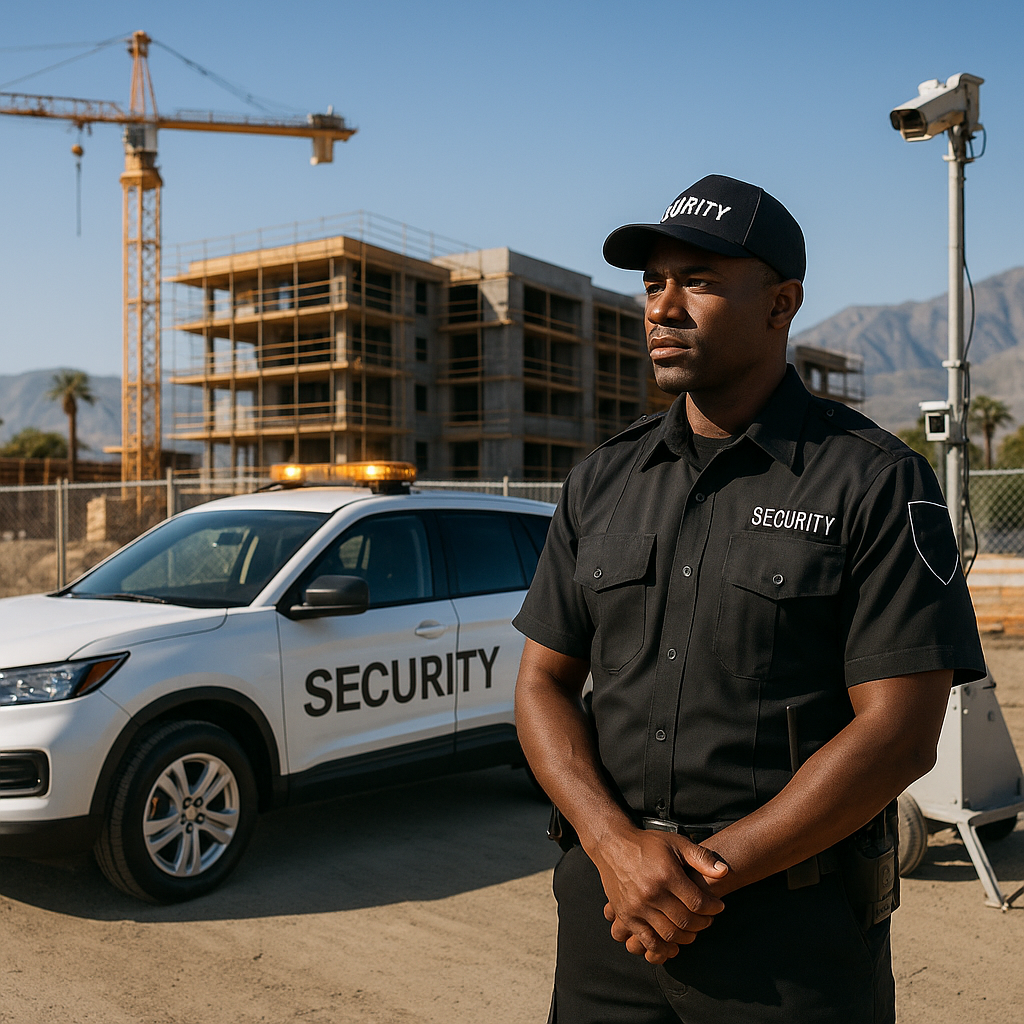
Construction Site Security in Coachella Valley: Stopping Equipment & Copper Theft Before It Delays Your Project
Construction Site Security in Coachella Valley requires more than a fence and a lock on the gate. Across Indio, Palm Desert, Coachella, La Quinta, and surrounding desert markets, contractors face repeat threats from copper theft, heavy equipment loss, unauthorized access, and schedule-disrupting vandalism. The most effective protection is a multi-layered defense strategy that combines physical perimeter barriers, GPS-verified security guard patrols, access-controlled delivery logging, high-visibility lighting, and active overnight monitoring during the phases when sites are most exposed.
CSI Ceja Security Inc. delivers that protection with licensed, professional security services built for real construction risk in Southern California. As a California Private Patrol Operator, PPO #120360, our team understands how extreme desert heat, early-morning trade schedules, and long unoccupied overnight windows increase vulnerability on local jobsites. We build security plans around those realities, not generic assumptions.
Construction security failures do not just lead to stolen property. They trigger inspection delays, subcontractor downtime, rework, missed milestones, and higher insurance costs. A stolen spool of copper or a missing skid steer can affect an entire build sequence and create expensive downstream problems that far exceed the value of the stolen item.
For developers, general contractors, and project managers, the goal is simple: deter theft before it happens, document activity in real time, and maintain controlled site access from groundbreaking through final delivery. That is exactly what a disciplined, layered security program is designed to do.
Construction site security in the Coachella Valley relies on a multi-layered defense strategy: physical perimeter barriers, GPS-verified security guard patrols, access-controlled delivery logging, and high-visibility lighting. Because extreme desert heat (110°F+) drives trade shifts to early mornings and leaves sites empty for long hours, active overnight coverage and real-time digital monitoring are critical during peak risk phases such as rough electrical and finish stages.
The High Cost of Jobsite Theft in the Coachella Valley
Jobsite theft is never a simple line-item loss. When materials, tools, or equipment disappear, contractors absorb immediate replacement costs and then face additional operational damage that can ripple across the entire schedule. In many cases, the indirect losses become the bigger problem.
That is why Construction Site Security in Coachella Valley must be treated as a core project control measure, not an afterthought. Security directly protects budgets, timelines, subcontractor coordination, and owner expectations.
Direct losses are only the first hit
If thieves remove copper conduit, wire, HVAC components, appliances, generators, or power tools, replacement costs start immediately. New material orders may take days or weeks to arrive depending on supply conditions. That delay can idle electricians, plumbers, HVAC installers, finish crews, and inspectors.
When a critical asset is missing, one stolen item can halt multiple trades at once. The result is not just theft. It is disruption.
Indirect costs often exceed the value of stolen property
Project teams often underestimate the secondary costs tied to a break-in. Re-inspection fees, delayed rough-in signoffs, rescheduled subcontractors, liquidated damages exposure, and emergency procurement all add pressure to the budget. Insurance carriers may also raise premiums or apply stricter underwriting terms after repeated claims.
In competitive development environments, delays also damage reputation. Owners and lenders expect site controls to be in place, especially on high-value residential, mixed-use, hospitality, and commercial projects.
High-target assets thieves look for first
Copper conduit and wiring are among the most common theft targets, particularly during rough electrical stages when material is exposed and structures are not yet fully secured. Copper can be removed quickly and sold just as quickly. This makes it a persistent threat on active projects.
Heavy machinery and fleet assets are also high-risk. Skid steers, mini-excavators, compact loaders, trailers, compressors, and generators are frequently staged in open laydown yards where visibility is limited overnight. If key control, perimeter barriers, and patrol verification are weak, those assets are vulnerable.
Hand tools, appliances, fixtures, and installed equipment become prime targets later in the build. During final finishes, sites may contain water heaters, condensers, interior fixtures, kitchen appliances, and packaged equipment before permanent access control systems are fully active.
Why Coachella Valley jobsites face unique vulnerabilities
The Coachella Valley presents a very specific operating environment. Developments often sprawl across large open parcels in areas such as Indio, Palm Desert, Coachella, and La Quinta. These sites usually have wider perimeters and fewer natural barriers than dense urban projects.
Extreme heat also changes the construction schedule. During summer and peak desert conditions, crews start earlier, leave earlier, and create long stretches where the site sits exposed before sunrise, after dark, and throughout the night. Those extended windows give thieves time to scout, breach, remove material, and leave before the next trade arrives.
Open desert access routes create another challenge. Unlike tighter urban footprints, local jobsites can have multiple approach points, low ambient lighting, and less surrounding activity. That makes visible guard presence and documented patrol verification even more important.
Key Risk Phases: When Is Your Site Most Vulnerable?
Every construction phase carries some exposure, but not every phase carries the same level of risk. Smart security planning aligns manpower, patrol frequency, lighting, and access control with the periods when loss is most likely and most damaging.
Effective Construction Site Security in Coachella Valley is phase-based. The strongest contractors and developers increase controls before risk peaks, not after a theft occurs.
Phase 1: Excavation and laydown yard setup
The first major vulnerability often starts before the site is fully built out from a security standpoint. During excavation and early mobilization, expensive machinery arrives before complete fencing, lighting, and defined traffic flow are in place. That creates an early opportunity for theft and unauthorized entry.
Laydown yards may hold generators, fuel tanks, loaders, trenching equipment, and portable storage units. At this stage, a visible overnight guard presence, perimeter checks, and controlled gate access are highly effective because thieves often target jobsites they believe are still loosely organized.
Phase 2: Rough electrical, plumbing, and HVAC
This is the peak risk window on many projects. Exposed copper wire, conduit, pipe, and mechanical components are staged on site before walls are closed and before buildings are fully secured. Thieves know these materials are valuable, portable, and often concentrated in predictable areas.
During rough electrical and MEP installation, the site needs aggressive after-hours protection. Guard patrols must verify perimeter integrity, inspect breach points, watch material staging areas, and control any after-hours vendor access. If there is one phase where overnight coverage cannot be treated as optional, this is it.
Phase 3: Finish stage and appliance delivery
Final phases introduce a different theft profile. Instead of raw materials, the site begins receiving high-value finished goods such as appliances, lighting packages, water heaters, HVAC units, and plumbing fixtures. Those items can disappear quickly if delivery logging and lock-up protocols are weak.
This phase also creates insider risk. Multiple trades, punch crews, delivery teams, inspectors, and vendors may move through the project in compressed timelines. Without disciplined logging and controlled access, it becomes harder to identify who was on site, when they entered, and what they removed.
5 Operational Protocols to Eliminate Copper Scraping & Equipment Loss
The most effective construction security program follows a layered sequence: perimeter defense, digital access control, GPS-verified patrols, secure staging, and live verification. Each layer solves a specific vulnerability. Together, they create a complete deterrence and response framework.
1. Maintain dynamic perimeter control and high-visibility lighting
Perimeter security should never remain static while the site changes every week. Fencing, vehicle gates, pedestrian access points, and temporary barriers must evolve with the construction phase. If the work area shifts but the security layout does not, blind spots appear.
Heavy-duty chain-link fencing should define the active perimeter, while laydown yards need reinforced access control and lockable entry points. Breach checks must be part of every patrol route. A fence only works if someone verifies it remains intact.
Lighting is equally important. High-visibility lighting reduces concealment, improves camera effectiveness, and increases the deterrent value of guard patrols. Solar light towers should be repositioned as structures rise and staging zones move. The best lighting plan is dynamic, not fixed.
2. Implement mandatory subcontractor and vendor check-in logs
Unauthorized access often hides behind legitimate-looking traffic. That is why every subcontractor, vendor, and after-hours delivery should be logged through a structured access-control process. If vehicles are entering without verification, the site is exposed.
Digital sign-in and sign-out procedures create accountability. Guards should record the company name, driver name, time of arrival, time of departure, vehicle identifiers, destination within the site, and associated delivery or work order. This log becomes critical when something goes missing.
Manifest verification is especially important during finish stages and off-hours access. Incoming vehicles should be matched to delivery paperwork, approved schedules, and designated receiving instructions. This single step helps prevent insider theft, false pickups, and unauthorized material removal.
3. Deploy standing BSIS-licensed security officers with GPS verification
Visible officer presence is one of the strongest deterrents available on a construction site. Uniformed guards reduce opportunistic trespassing and force would-be thieves to reconsider the risk of detection. At night, on weekends, and during holiday shutdowns, that visibility matters even more.
However, visibility alone is not enough. Patrol performance must be documented. GPS-timestamped tour systems confirm that officers completed required perimeter checks, gate inspections, laydown yard inspections, and designated interior rounds. This creates accountability and gives project stakeholders proof that post orders were actually carried out.
CSI Ceja provides licensed professionals for both standing guard posts and mobile patrol services. On many projects, a hybrid model works best: stationary overnight coverage during peak vulnerability windows and mobile verification rounds during lower-risk periods. For many construction sites, dedicated construction site security is the most effective way to maintain consistency from mobilization through closeout.
4. Enforce lock-up and staging protocols at shift change
Security breakdowns often happen during the handoff between active work and inactive hours. If crews leave tools scattered, copper spools exposed, gates unsecured, or equipment loosely parked, the site becomes easy to strip before sunrise. Strong shift-end procedures are essential.
Copper wire, portable tools, and high-value small assets should be stored inside locked steel conex containers or similarly hardened storage areas before every shift ends. This simple control dramatically reduces grab-and-go theft. Material should never be left in open, predictable staging locations overnight when secure storage is available.
Heavy machinery should also be staged strategically. Corral formations work well by positioning large equipment around smaller assets to limit easy access. Key control, immobilization measures, and coordinated parking patterns make removal slower and more visible. The objective is to increase time, effort, and detection risk for anyone attempting theft.
5. Integrate physical security presence with live-monitored systems
Passive cameras that only record evidence after a theft do not provide full protection. The strongest strategy combines trained physical officers with live-monitored technology that supports active deterrence. When both elements work together, response becomes faster and more targeted.
Remote camera towers, motion alerts, lighting activation, and live review can help identify activity in real time. A security officer can then investigate, challenge trespassers, verify authorized access, or escalate to law enforcement when needed. This turns surveillance into action.
That integration is especially valuable during long overnight windows in the desert, where ambient activity is low and large perimeters are common. Human patrols supported by digital monitoring create a layered defense that is far more effective than either method alone.
Armed vs. Unarmed Security Officers: Selecting the Right Post Orders
Not every construction site requires the same type of officer. The right post order depends on site history, asset value, location, prior incidents, threat environment, and the level of after-hours exposure. Choosing correctly improves both safety and budget efficiency.
When unarmed security guards are the right fit
Unarmed officers are ideal for active daytime access control, standard overnight perimeter patrols, visitor and delivery logging, and visible deterrence on most routine projects. Their primary functions include de-escalation, site presence, patrol documentation, gate control, and daily reporting.
For many Coachella Valley jobsites, unarmed coverage is the appropriate and cost-effective starting point. A professional unarmed security officer can manage gate activity, monitor perimeter integrity, enforce post orders, and provide consistent after-hours presence without overcomplicating the site security plan.
When armed security officers should be considered
Armed officers are appropriate for higher-risk environments. This includes sites with documented prior break-in attempts, high-value asset concentration, repeated trespassing, isolated industrial conditions, or elevated threat concerns. Their presence provides a stronger defensive deterrent when the risk profile justifies it.
In California, armed officers must meet stricter standards, including BSIS guard registration, state firearms permits, and recurring qualification requirements. When clients need enhanced asset protection or elevated emergency readiness, professionally deployed armed security guards may be the right solution.
Post orders should match real risk, not guesswork
Security staffing should be based on documented site conditions. Blanket assumptions lead to wasted money or weak protection. A professional assessment should review the size of the site, perimeter complexity, neighborhood conditions, schedule exposure, material staging, and history of theft or trespassing.
CSI Ceja develops post orders that align with actual operating realities. That includes gate procedures, patrol frequencies, reporting requirements, escalation protocols, delivery logging rules, and coordination with project leadership. Strong post orders turn officers into a reliable operating control, not a symbolic presence.
California Regulatory & Insurance Compliance Requirements
Construction security is not only about deterrence. It is also about compliance, documentation, and defensible operating standards. In California, contractors should work only with properly licensed providers that understand BSIS regulations and the importance of documented reporting.
For anyone evaluating Construction Site Security in Coachella Valley, compliance must be verified before a contract is signed.
Verify active BSIS licensing and PPO status
Any company providing security guard services in California must operate under an authorized Private Patrol Operator license. This is a non-negotiable requirement. If a vendor cannot verify active PPO licensing, they should not be entrusted with jobsite protection.
CSI Ceja Security Inc. operates as a licensed security provider under PPO #120360. That licensing matters because it confirms the company is authorized to provide professional guard services under California law.
Confirm current guard training compliance
Security personnel must meet California training requirements, including Power to Arrest and Use of Force training under applicable state standards. Contractors should not assume every provider maintains consistent training compliance. They should verify it.
Well-trained officers are more effective at access control, observation, report writing, de-escalation, and emergency response. On construction sites, that training directly affects how well guards identify suspicious behavior, document incidents, and enforce site rules.
Daily incident logs support insurance and claims defense
Structured daily activity reports are not administrative extras. They are valuable records that help general contractors, developers, and property owners defend against claims, establish timelines, and show that reasonable site controls were in place.
Digital incident logs should document patrol rounds, access events, delivery activity, perimeter conditions, observed hazards, suspicious contacts, lock-up status, and any escalation taken. When an incident occurs, strong reporting can support insurance claims and limit disputes over what happened and when.
For broader insight into professional guard functions, our resource on security guard duties, patrol responsibilities, and incident response explains how trained officers support operational control in high-risk environments.
Why Local Coachella Valley Security Expertise Matters
Construction security is always stronger when the provider understands the local environment. Coachella Valley sites operate differently from dense coastal projects or compact urban developments. Larger parcels, heat-driven scheduling, remote access routes, and seasonal labor patterns all influence security planning.
A provider familiar with the region can anticipate exposure points before they become losses. That includes identifying overnight risk windows, recommending patrol timing around trade departures, adjusting lighting and perimeter plans as the site evolves, and recognizing when a project has moved into a peak theft phase.
CSI Ceja serves the desert communities where these risks are most active, including Palm Springs and surrounding Coachella Valley markets. Our approach is practical, documented, and built around real operating conditions on Southern California jobsites.
Clients looking for a broader overview of company capabilities can also review why CSI Ceja leads in the Coachella Valley. The same operational discipline that protects commercial and residential properties applies directly to construction environments where loss prevention and schedule protection are critical.
How to Build a Construction Security Plan That Actually Works
A strong plan starts with a site-specific assessment. There is no one-size-fits-all model for every project. The right strategy depends on footprint size, asset profile, phase schedule, lighting conditions, neighborhood exposure, trade traffic, and site history.
From there, the plan should define perimeter layout, gate procedures, patrol routes, logging requirements, overnight staffing levels, escalation thresholds, and reporting standards. It should also identify which project phases require increased coverage, especially rough electrical and final delivery periods.
Most importantly, the plan must be enforced consistently. Security fails when procedures exist on paper but are not verified in the field. GPS-confirmed patrols, active supervision, and digital reporting close that gap and give project stakeholders confidence that controls are functioning as intended.
Contractors that treat security as part of project operations consistently perform better than those that address it only after a theft. Prevention is always less expensive than disruption.
Frequently Asked Questions About Construction Site Security in Coachella Valley
How do security guards prevent copper theft on jobsites before walls are enclosed?
Security guards prevent copper theft by conducting regular foot and vehicle patrols around framed structures, verifying after-hours access credentials, checking fencing and gates for breach points, monitoring staging areas, and ensuring copper wire and tools are locked inside secure storage containers before shift end. Visible patrol presence also deters thieves from attempting quick overnight removal.
What is the most cost-effective way to secure a construction site in Palm Springs or Indio?
A hybrid model is usually the most cost-effective option. This combines GPS-tracked mobile patrol rounds with stationary overnight guards during the highest-risk phases, especially rough-in and finishing. That approach gives contractors strong coverage when exposure is greatest while controlling labor costs during lower-risk periods.
Are construction security guards required to hold state licenses in California?
Yes. Security personnel in California must be registered in compliance with BSIS requirements and work under a licensed Private Patrol Operator. Contractors should always verify the provider's PPO status and confirm that officers meet current training standards before assigning them to a project.
When should a project increase overnight security coverage?
Projects should increase overnight coverage when high-value equipment is first delivered, when copper and MEP materials are exposed during rough-in, when lighting or fencing is still incomplete, and when finish-stage appliances or fixtures begin arriving. Any prior theft attempt or recurring trespass issue is also a clear trigger for stronger overnight protection.
Do cameras alone provide enough protection for a construction site?
No. Cameras are useful, but passive recording alone is not enough. The best results come from combining live-monitored systems with professional security officers who can investigate alerts, verify access, challenge trespassers, and document incidents in real time. Active deterrence is significantly more effective than post-incident review alone.
Final Thoughts
Construction theft in the Coachella Valley is predictable, preventable, and expensive when ignored. The most effective response is a layered program that combines perimeter barriers, controlled access, GPS-verified patrols, secure staging, lighting, and real-time monitoring. That approach protects materials, equipment, schedule integrity, and insurance defensibility at the same time.
If your project is entering a high-risk phase, do not wait for a loss to reveal security gaps. CSI Ceja Security Inc. provides licensed construction security solutions tailored to local conditions across the Coachella Valley and Southern California. For immediate assistance, contact 760-972-0000, email info@csiceja.com, or visit csiceja.com.
Ready to Protect Your Property?
Contact CSI Ceja Security Inc. today for a free security consultation. Our licensed professionals are ready to create a custom security plan for your needs.
Request a Free Quote