Palm Springs HOA Guard Services for Modern Gated Communities
Palm Springs HOA Guard Services for Modern Gated Communities
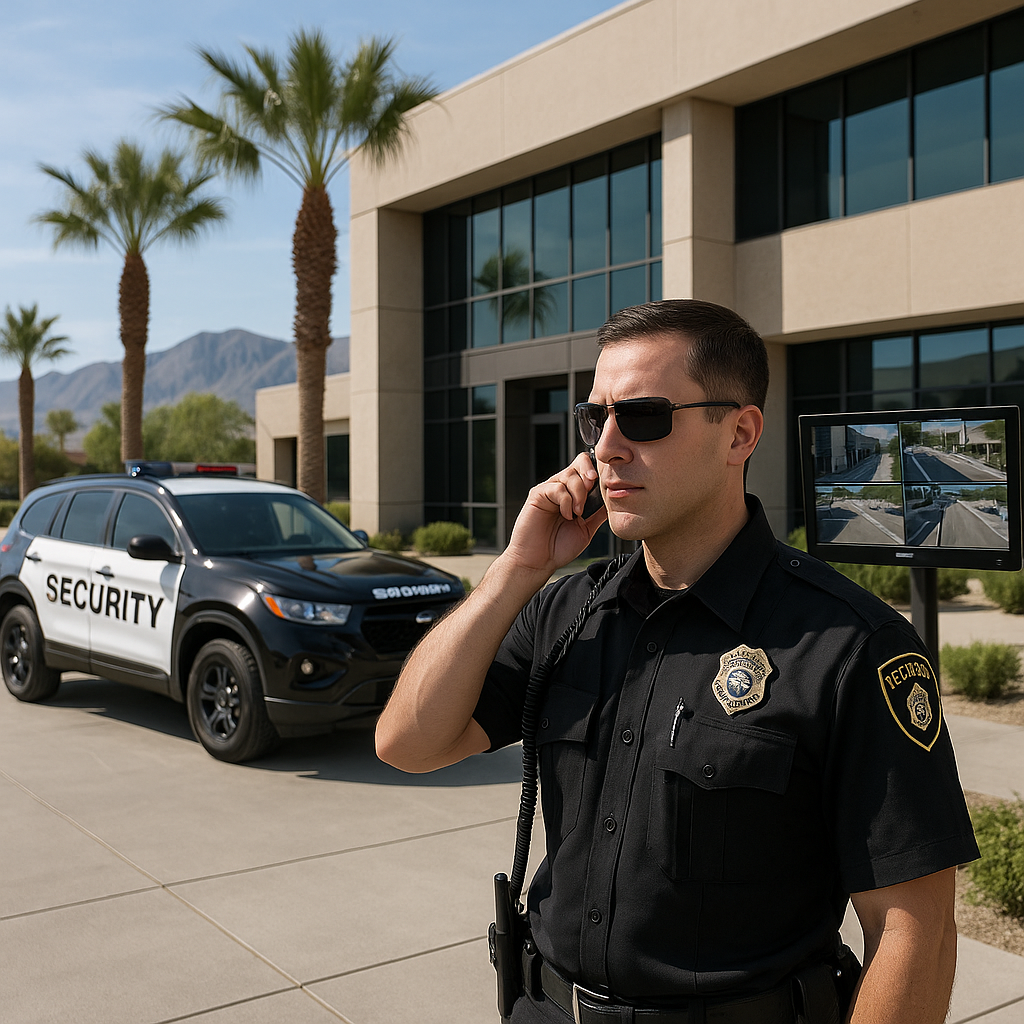
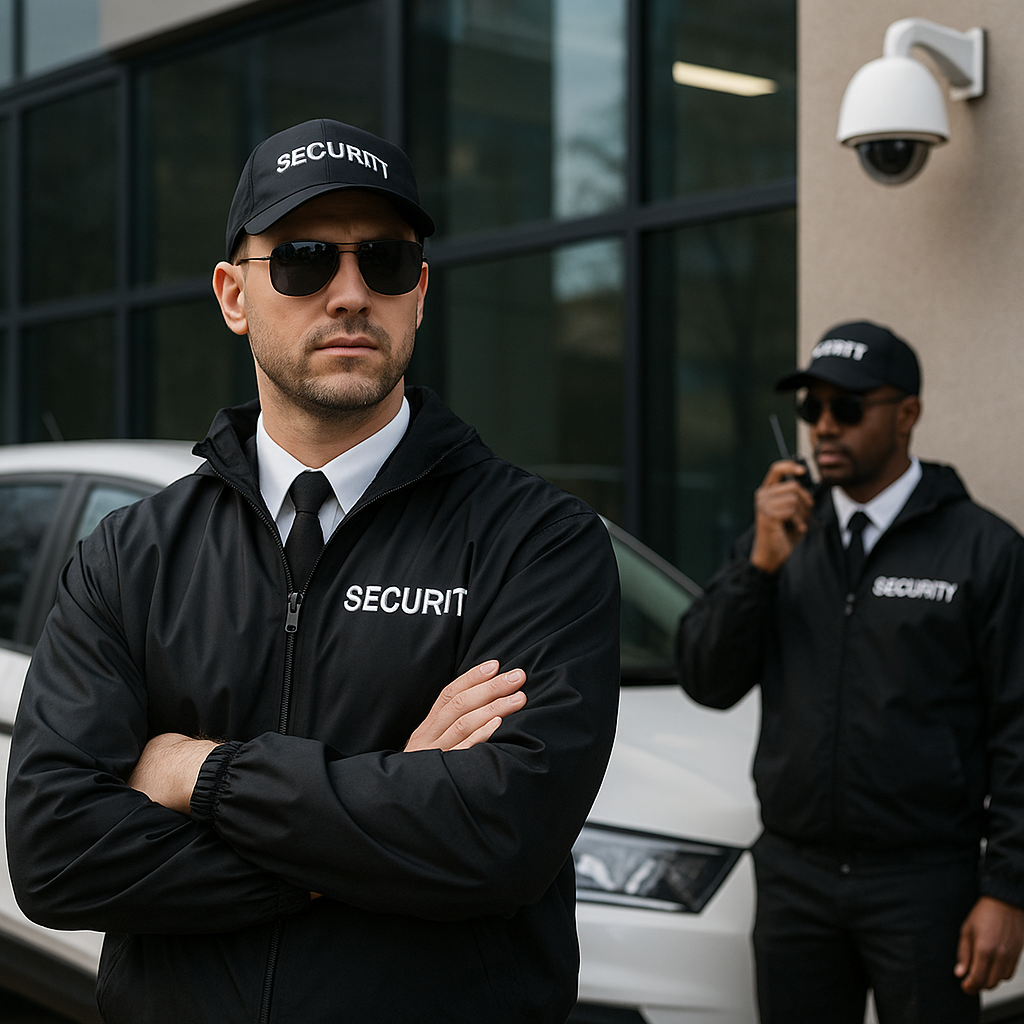
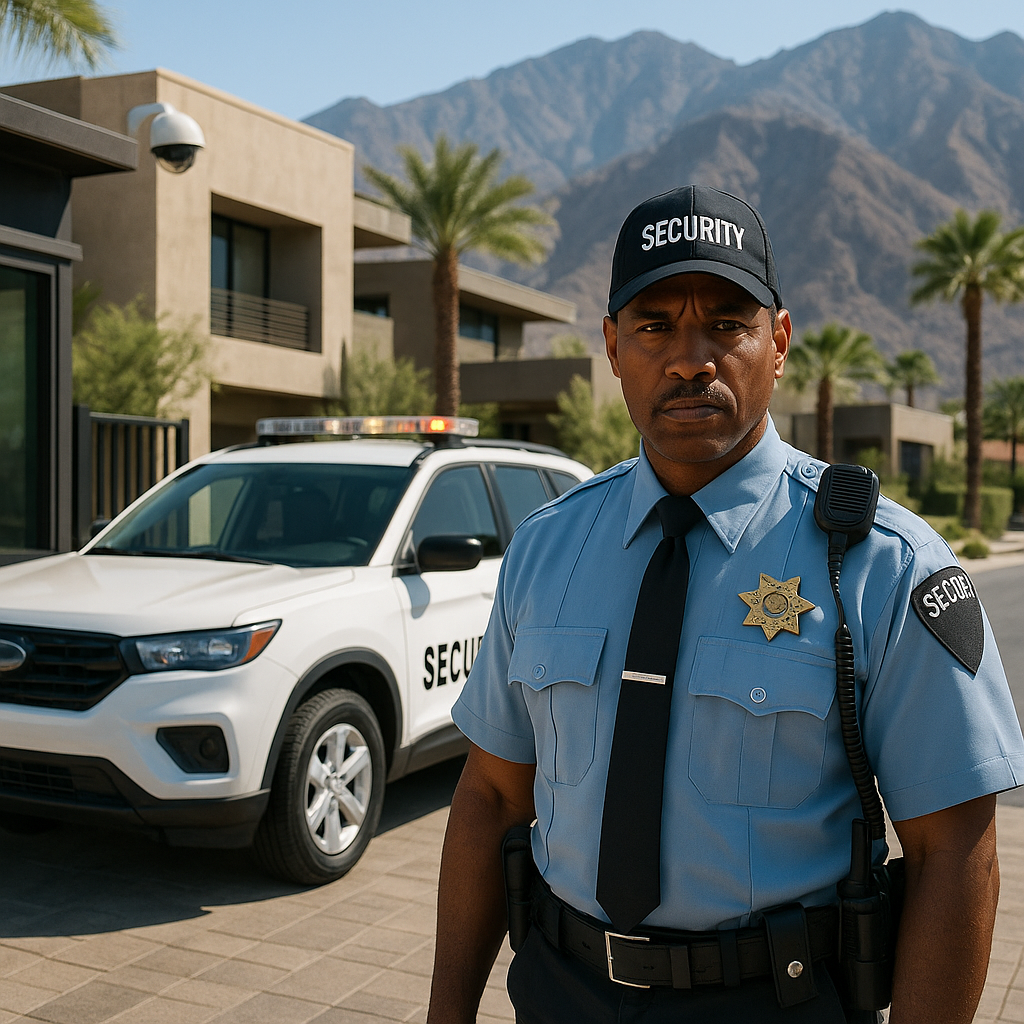
Palm Springs HOA guard services are no longer limited to checking names at a gate and waving in guests. Today’s private communities need a faster, more accountable, and more secure model that combines trained officers, digital visitor tools, clear post orders, and proactive patrol coverage. For HOAs in Palm Springs and the South Valley, CSI Ceja Security Inc. delivers a modern approach that protects residents, improves traffic flow, and strengthens perimeter control.
From luxury enclaves to active adult communities, board members and property managers are under pressure to improve resident experience without compromising safety. Entry bottlenecks, unauthorized visitors, speeding complaints, parking violations, and perimeter breaches all expose weak points in outdated gate operations. The solution is not guesswork. It is a professionally designed security program built by a licensed provider with real field experience.
CSI Ceja Security Inc. (PPO #120360) helps HOAs modernize guard gate operations across Palm Springs and surrounding communities with proven staffing models, documented procedures, and responsive support. Whether your association needs dedicated Residential & HOA Security, integrated Mobile Patrol Services, or a full review of existing entry procedures, our team builds security programs that work in the real world.
Why Palm Springs HOA Guard Services Matter More Than Ever
Private residential communities in Palm Springs and the South Valley face a distinct operating environment. Seasonal traffic, vacation rentals, service vendors, deliveries, special events, and high resident expectations create constant pressure on gate operations. A poorly managed entrance becomes a daily frustration point and a security liability.
Professional Palm Springs HOA guard services establish order at the front line of the community. Trained officers verify access, document visitor activity, enforce site-specific rules, and present a visible deterrent to trespassers and opportunistic criminals. When combined with patrol support and written procedures, guard services become a complete access control system instead of a single checkpoint.
This matters because HOA security is about more than crime prevention. It is also about preserving property values, protecting quality of life, reducing resident complaints, and creating a consistent standard of control across the property. Strong gate operations set the tone for the entire community.
Traditional vs. Hybrid Systems in Palm Springs HOA Guard Services
Many communities still rely on a traditional gate guard model. In that setup, the officer manually checks visitor lists, calls residents for approval, writes entries in a paper log, and opens the gate once access is confirmed. While this approach can work at smaller sites, it often becomes slow, inconsistent, and difficult to audit.
A hybrid model combines on-site officers with digital visitor management tools. This approach improves verification speed, creates searchable access records, and reduces manual errors. It also allows security personnel to focus on observation, incident response, and enforcement instead of being buried in repetitive paperwork.
How traditional gate guard operations work
Traditional gate operations depend heavily on the individual officer’s memory, communication skills, and consistency. Visitor names may be written by hand, resident approvals may happen by phone, and access history may only exist in a clipboard or paper notebook. During busy periods, lines form quickly and mistakes increase.
This model also limits reporting. If the HOA needs to review who entered on a particular date, when a vendor arrived, or whether a denied entry was documented, paper systems slow everything down. That creates unnecessary risk for the association and frustration for management.
How hybrid digital visitor management improves performance
Hybrid systems maintain the human judgment of an officer while adding digital support. Residents can pre-authorize guests, delivery vehicles, and vendors in advance. Officers can verify credentials through a digital platform, record vehicle details, and maintain accurate entry logs in real time.
This is especially effective for communities with frequent guests, regular contractors, and multiple service providers. A digital system helps gatehouse access control Palm Springs operations move faster without sacrificing standards. It also gives HOA managers better oversight through reporting, audit trails, and trend analysis.
Why the hybrid model is the new standard
The best security programs do not replace officers with technology. They use technology to support trained officers. Cameras, gate software, visitor databases, and credential tools are only effective when managed by professionals who know how to verify access, identify suspicious behavior, and follow clear escalation procedures.
That is why CSI Ceja recommends a layered approach. For many South Valley communities, the strongest model includes gatehouse staff, digital credentialing, roving patrols, and written post orders tailored to the property’s layout and traffic patterns.
Gatehouse Access Control Palm Springs Best Practices
Effective gatehouse access control Palm Springs communities can rely on starts with process discipline. Every authorized entry must be handled consistently, whether the visitor is a family guest, rideshare driver, landscaper, food delivery service, contractor, or open house attendee. Inconsistent gate procedures are one of the most common causes of complaints and security failures.
The officer at the gate must know exactly what to check, what to record, when to call a resident, when to deny access, and when to escalate to management or law enforcement. The process must be fast enough to prevent backups and strict enough to prevent unauthorized entry.
Core access control functions
A strong gate program includes resident verification, visitor screening, vendor check-in, delivery handling, and emergency access procedures. Every category needs a written protocol. Officers should never be forced to improvise basic access decisions.
Communities with high guest volume benefit from digital pre-approval lists and scannable credentials. Communities with frequent contractors often need vendor registration, insurance verification procedures, and restricted access windows. Luxury communities may also require heightened privacy protocols for residents and guests.
Credentialing and identity checks
Visitor credentialing should be simple, fast, and documented. Depending on the site, this can include resident pre-authorization, government-issued ID review, vehicle information capture, temporary access passes, and digital entry records. The system must balance hospitality with control.
For vendors and recurring service providers, long-term credentialing can reduce delays while maintaining accountability. That might include approved vendor lists, QR-based check-in, designated contractor passes, or pre-screened registration. The right system depends on the HOA’s operating profile.
Managing guest traffic without compromising security
Busy weekends and seasonal occupancy spikes can overwhelm poorly planned gates. Communities that host many social visitors, short-term guests, or service calls need staffing and technology that can absorb surges. This is where hybrid systems outperform manual gate logs.
Proper lane design, clear signage, pre-entry instructions, and trained officers all reduce backups. Residents notice the difference immediately. Security becomes more professional, and gate delays stop dominating board meetings.
Gated Community Security Guards Beyond the Front Gate
Many HOAs focus heavily on the gatehouse and overlook what happens inside the property. In reality, the most effective gated community security guards do much more than process visitors. They enforce community standards, support emergency response, observe suspicious activity, and maintain a visible presence that discourages violations.
Inside private communities, residents expect prompt response to nuisance issues and rule violations. Security personnel must know how to address concerns professionally, document incidents thoroughly, and apply HOA procedures consistently.
Speed enforcement inside HOA communities
Speeding is one of the most common resident complaints in gated neighborhoods. Delivery drivers, vendors, guests, and even residents may ignore posted limits if there is no visible enforcement. That creates safety hazards for pedestrians, cyclists, pets, and children.
Security officers and patrol personnel can support speed compliance through visible patrols, warning contacts, incident logs, and reporting to management. In some communities, radar feedback signs or community speed monitoring programs may also be appropriate. Enforcement must align with HOA authority and written rules.
The key is consistency. If officers are expected to address speeding, the HOA must define when to issue verbal warnings, when to document repeat offenders, and how reports move to management for follow-up. Vague expectations produce inconsistent results.
Parking compliance and unauthorized vehicle control
Parking disputes can quickly become one of the biggest operational burdens in an HOA. Guest parking abuse, overnight parking violations, blocked fire lanes, abandoned vehicles, and vendor parking issues all generate conflict. Security officers help by documenting conditions, applying site rules, and reporting violations according to policy.
For communities with dense streets or shared parking zones, patrol officers should be equipped with clear maps, violation categories, and escalation instructions. Towing authority, if allowed, must be handled with extreme care and only under association-approved procedures. Professional security reduces liability by ensuring parking enforcement is documented and consistent.
Perimeter fence breach patrols
Perimeter security is often the weakest link in gated communities. A guarded entrance means little if damaged fencing, open pedestrian gates, broken hardware, or poorly lit edges allow unauthorized access elsewhere. This is why patrol coverage must include structured perimeter checks.
Officers should inspect fence lines, vehicle gates, pedestrian access points, walls, common-area boundaries, and lighting conditions. Signs of tampering, cut fencing, forced entry, or recurring foot traffic must be documented immediately. This is a critical function of HOA mobile patrol programs.
Communities in desert and resort environments also face visibility challenges at night and along large perimeter segments. A mobile unit equipped with strong reporting protocols provides a far more complete security posture than a gate-only model.
HOA Mobile Patrol for Palm Springs and South Valley Communities
HOA mobile patrol is essential for communities that want complete coverage beyond the gatehouse. Patrol officers move through interior streets, amenity areas, parking zones, perimeter lines, and vulnerable common spaces. They identify issues early, respond to resident concerns, and create a visible deterrent throughout the property.
This is particularly valuable for larger developments, multi-gate communities, and neighborhoods with pools, clubhouses, tennis courts, golf-adjacent zones, or remote perimeter edges. A static guard cannot effectively cover all of those areas alone. Patrol fills the gap.
What mobile patrol should include
An effective patrol program uses documented tour patterns, randomized timing, incident reporting, and supervisor oversight. Patrol officers should check gates, locks, lighting, suspicious vehicles, perimeter conditions, amenities, parking compliance, and after-hours activity. Every patrol should produce useful information, not just drive-through visibility.
At CSI Ceja, patrol strategy is designed around the property’s layout, incident history, and community priorities. That means no generic coverage plans. Each HOA needs a custom program based on where its true risks exist.
When HOAs need patrol in addition to gate officers
If your community receives repeated complaints about speeding, parking, loitering, suspicious activity, or perimeter concerns, gate staff alone are not enough. If the entrance is busy, gate officers often cannot leave their post to investigate issues deeper inside the property. That is where dedicated patrol support becomes essential.
For many communities, the strongest setup is a gate officer during peak access hours combined with scheduled or overnight mobile patrol services. This creates full-property awareness and improves response coverage without overloading the gatehouse team.
How to Draft HOA Security Post Orders That Actually Work
One of the biggest reasons HOA security programs fail is unclear post orders. Security officers cannot deliver consistent performance if the HOA, management team, and security company have not defined expectations in writing. Strong post orders are the operational backbone of professional security.
Post orders should explain the officer’s duties, authority, limitations, reporting requirements, contact protocols, and emergency procedures. They must be specific to the property. Generic instructions create confusion, gaps in performance, and unnecessary liability.
What HOA post orders should cover
Every HOA security post order should define gate access procedures, visitor authorization rules, vendor entry standards, resident contact methods, emergency response steps, patrol duties, parking enforcement protocols, speed complaint handling, incident documentation, and escalation chains. It should also define shift change procedures and supervisor notification standards.
Communities with amenities should include access rules for pools, clubhouses, fitness centers, and recreation areas. Communities with multiple gates should identify which access points are staffed, which are controlled by code or credential, and how after-hours issues are handled.
Key questions boards and managers should answer
Can officers deny access without resident confirmation? How should food delivery drivers be processed? What happens if a vendor arrives without pre-approval? Are officers expected to enforce parking rules directly or document them for management? What constitutes a perimeter breach requiring immediate escalation?
If these questions are not answered in writing, officers will be forced to make judgment calls that may vary by shift. That inconsistency undermines resident confidence and exposes the HOA to unnecessary disputes.
How to make post orders usable in the field
Post orders should be organized, current, and easy to follow under pressure. Officers do not need a vague policy binder filled with board language. They need clear instructions, site maps, phone lists, access procedures, emergency steps, and reporting standards that can be used in real time.
CSI Ceja works with HOAs to turn broad security goals into practical field instructions. That process improves accountability and helps both management and security staff operate from the same playbook.
Staffing, Training, and Accountability in HOA Security
Not all guard services are equal. The quality of a residential security program depends on officer selection, site training, supervision, and management support. HOAs should never assume that a uniform at the gate equals a professional operation.
Residential officers need a specific skill set. They must be alert, courteous, composed, and highly consistent. They need strong communication skills, accurate report writing habits, and the ability to de-escalate tense situations without losing control of the post.
Training standards matter
Gate officers must be trained on access control, visitor screening, report writing, emergency procedures, customer service, and site-specific rules. Patrol officers need additional training on perimeter checks, vehicle observation, parking documentation, and field communication. Residential security is a specialized assignment, not an entry-level placeholder post.
Communities that also host social functions or resident gatherings may benefit from support that overlaps with Event Security Services during high-traffic periods. The important point is that staffing should match operational demand, not guesswork.
Supervision and reporting
An HOA security program should include field supervision, performance reviews, and reliable reporting. Site activity must be documented in a way that management can actually use. That includes incident reports, daily activity reports, visitor logs, patrol records, and trend summaries where appropriate.
Without oversight, even good officers drift toward inconsistent habits. Supervision keeps standards high and ensures that post orders are being followed across all shifts.
Common Mistakes HOAs Make When Upgrading Security
Many associations know they need better security but make costly implementation mistakes. The most common error is focusing on hardware without fixing procedure. Cameras, software, and upgraded gate equipment are useful, but they do not replace trained personnel and written standards.
Another mistake is under-scoping the actual problem. A community that complains about unauthorized visitors may really have weak resident pre-authorization procedures. A community with repeated trespassing may really have perimeter gaps, poor lighting, and no patrol documentation.
Relying on gate staff alone
If the entire security plan depends on one officer at one gate, the property has limited resilience. Emergencies, resident calls, internal violations, and perimeter concerns all compete for attention. Layered coverage is stronger and more realistic.
Using unclear vendor and visitor rules
Confusing access policies create resident frustration and officer inconsistency. If the community wants strict access control, it must support that standard with resident education, written procedures, and a workable credentialing process.
Failing to review data and trends
Digital logs and patrol reports are only valuable if someone reviews them. Management should look for repeat denied entries, peak traffic times, frequent parking zones, vendor issues, and recurring perimeter concerns. Better information leads to better board decisions.
Why CSI Ceja Leads HOA Security in Palm Springs and the South Valley
CSI Ceja Security Inc. is built for professional, high-accountability security operations. We understand the realities of gated communities, resident expectations, and HOA governance. Our team develops site-specific guard gate procedures, patrol strategies, and reporting systems that help communities operate with confidence.
We serve residential communities throughout the Coachella Valley and Southern California, including Palm Springs, Palm Desert, Rancho Mirage, La Quinta, and Indio. For associations evaluating providers, our insights on residential community security expertise and gated community visitor management best practices provide additional guidance.
Our approach is direct. We assess the property, identify security gaps, define post orders, align staffing to actual risk, and implement systems that improve both control and resident experience. That is how modern HOA security should be done.
Building a Modern HOA Security Plan
The right security model for a private community depends on size, traffic volume, resident demographics, layout, amenity profile, and risk exposure. Some sites need a dedicated gate officer with digital visitor management. Others need layered support with patrol, perimeter checks, after-hours enforcement, and supervisor oversight.
What every community needs is clarity. Clear expectations, clear procedures, clear reporting, and clear accountability. When those pieces are in place, security becomes measurable and reliable instead of reactive.
If your association is still operating with outdated logs, inconsistent entry approvals, or limited perimeter awareness, now is the time to modernize. Professional Palm Springs HOA guard services should protect the entrance, the interior, and the reputation of the community as a whole.
Frequently Asked Questions
What are Palm Springs HOA guard services?
Palm Springs HOA guard services are professional security solutions designed for private residential communities. They typically include gatehouse access control, visitor screening, resident assistance, patrol coverage, incident reporting, and enforcement support for HOA rules.
Are traditional gate guards enough for a gated community?
Not usually. Traditional gate guards can manage basic entry, but many communities need a hybrid model that adds digital visitor management, better credentialing, patrol support, and stronger perimeter oversight for full protection.
What is gatehouse access control in Palm Springs communities?
Gatehouse access control Palm Springs communities use to regulate entry includes visitor verification, vendor processing, resident authorization, temporary passes, access logging, and denial or escalation procedures. The goal is fast, consistent, and documented entry management.
Why does an HOA need mobile patrol if it already has a guarded gate?
HOA mobile patrol extends security beyond the entrance. Patrol officers check speed compliance, parking issues, common areas, amenities, suspicious activity, and perimeter fence conditions that gate staff cannot continuously monitor.
What should HOA security post orders include?
Post orders should include visitor entry procedures, vendor rules, resident contact methods, emergency protocols, patrol duties, parking enforcement steps, incident reporting standards, escalation contacts, and any site-specific HOA policies officers must enforce.
Ready to Protect Your Property?
Contact CSI Ceja Security Inc. today for a free security consultation. Our licensed professionals are ready to create a custom security plan for your needs.
Request a Free QuoteCSI Ceja Security Inc. (PPO #120360)
760-972-0000 | info@csiceja.com | csiceja.com