
Palm Springs Nightclub Bouncers: De-Escalation & Door Control
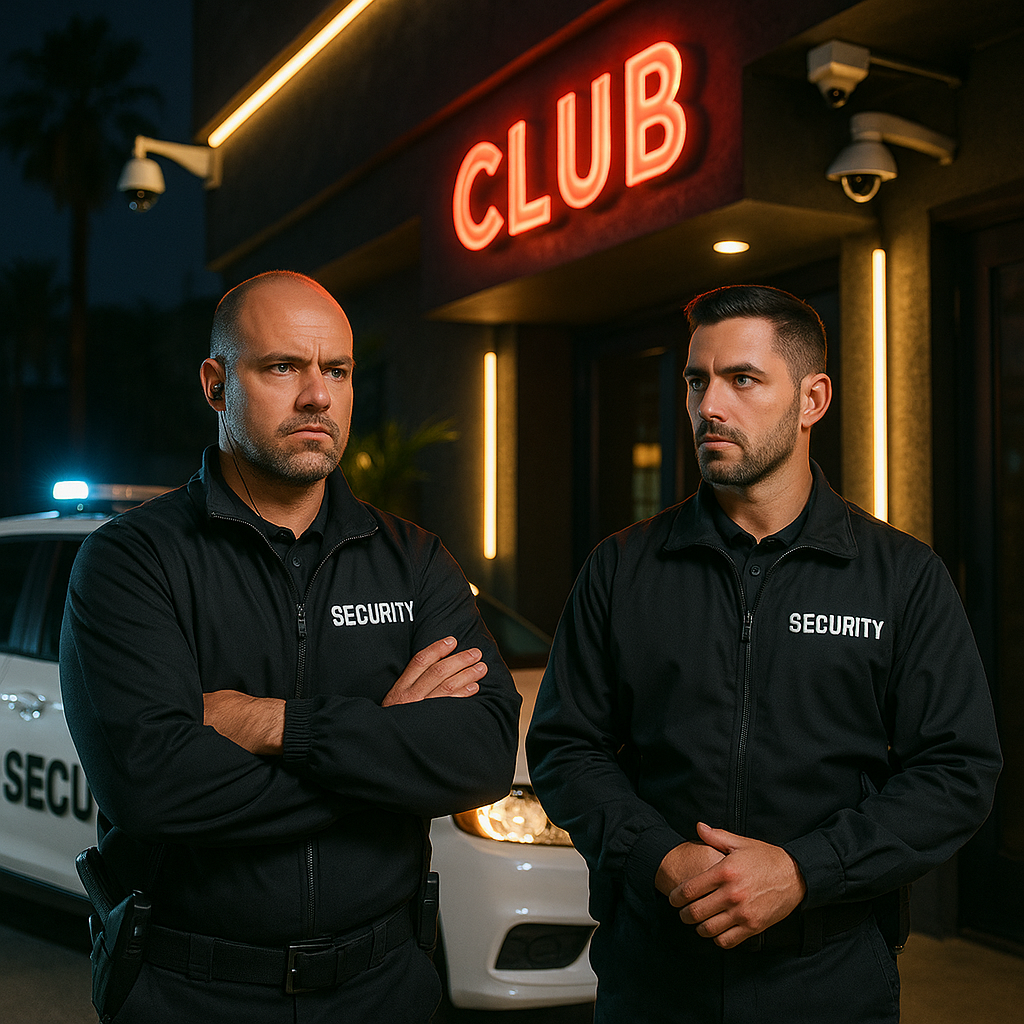
Palm Springs Nightclub Bouncers: De-Escalation & Door Control
Palm Springs nightclub bouncers play a critical role in protecting guests, staff, and business assets in one of Southern California’s most active nightlife markets. In Palm Springs, effective nightlife security is not about intimidation. It is about trained de-escalation, disciplined door control, alcohol-awareness compliance, emergency readiness, and professional judgment under pressure.
CSI Ceja Security Inc. delivers nightlife protection that matches the realities of bars, lounges, restaurants, music venues, and high-traffic entertainment corridors. From Arenas Road to Palm Canyon Drive, security teams must control entry points, identify threats early, prevent overcrowding, and respond lawfully when incidents escalate. That level of protection requires licensed professionals, clear post orders, and site-specific planning.
For hospitality operators in the Coachella Valley, the right security program supports both safety and guest experience. Well-trained officers reduce fights, manage intoxicated patrons, protect employees during closing, and help ownership meet duty-of-care expectations. That is why professional security is a business necessity, not an optional expense.
Why Palm Springs Nightlife Needs Specialized Security
Palm Springs nightlife has a distinct operating environment. Venues often deal with dense weekend crowds, alcohol service, tourist foot traffic, special events, and late-night movement between bars, restaurants, and hotels. These factors increase the likelihood of disputes, trespassing, aggressive behavior, and entry-control issues.
Palm Springs nightclub bouncers must be trained beyond basic presence. They need situational awareness, communication discipline, and a strong understanding of how quickly a minor disturbance can become a major liability. In nightlife settings, one poor decision at the door can trigger injuries, property damage, reputational harm, and legal exposure.
Businesses near nightlife corridors also benefit from security teams familiar with local patterns. Operators in Palm Springs need officers who understand peak traffic windows, rideshare congestion, repeat problem behaviors, and the importance of maintaining safe exterior lines and reentry procedures.
Common nightlife security risks
Most nightlife incidents fall into predictable categories. The key is identifying them early and applying the right intervention before conditions deteriorate.
- Intoxicated or impaired patrons at entry
- Fake IDs and age-verification disputes
- Overcapacity conditions and blocked egress routes
- Arguments between patrons inside or in waiting lines
- Harassment, stalking, and unwanted contact
- Theft, disorderly conduct, and vandalism
- Cash-handling risks during closeout
- Weapon concerns or targeted violence threats
Palm Springs Nightclub Bouncers and Door Control Best Practices
Door control is the foundation of nightlife security. If a venue loses control at the entrance, every internal security challenge becomes harder to manage. Strong entry procedures allow security to screen for risk, maintain occupancy limits, preserve guest flow, and keep unauthorized individuals out.
Palm Springs nightclub bouncers should operate from written access-control standards. These standards define ID checks, bag-check authority where applicable, refusal-of-entry criteria, incident documentation, communication channels, and supervisor escalation steps. Consistency protects the business and reduces claims of unfair treatment.
ID verification and age screening
Security officers at nightlife venues must apply careful and uniform ID screening. This includes verifying date of birth, examining physical security features, comparing facial characteristics, and watching for group behavior that suggests coordinated underage entry attempts. Officers should remain professional and non-confrontational when denying entry.
Arguments over IDs are common. The correct approach is calm explanation, clear policy language, and immediate redirection away from the line when needed. Door staff should never turn a routine refusal into a public power struggle.
Line management and exterior presence
Exterior crowd management matters as much as interior security. Patrons waiting outside may already be impaired, impatient, or engaged in confrontational behavior before they reach the front. Bar crowd control guards must maintain visible order, prevent line-cutting disputes, monitor sidewalk congestion, and keep exits unobstructed.
Venues in high-traffic entertainment zones especially benefit from layered security. A lead door officer, a line-control officer, and a roaming exterior officer create stronger coverage than relying on a single bouncer at the entrance. This model supports safer communication and faster intervention.
Properties concerned with broader hospitality and retail-area security can also review our insights on Palm Canyon Drive security and retail crime prevention.
Capacity control and occupancy awareness
Overcrowding is both a safety issue and a liability issue. Door teams must track admissions and exits in real time. They need immediate communication with management when capacity thresholds are approaching or when interior congestion near bars, dance floors, hallways, or patios creates risk.
Restaurant security guards and nightclub entry personnel should understand that fire code compliance is not optional. Occupancy control protects emergency egress, reduces conflict, improves service flow, and supports safer responses during evacuations or medical incidents.
De-Escalation Training for Nightlife Security Teams
De-escalation is the most important skill in nightlife security. It is the difference between a controlled resolution and a viral incident, injury claim, or criminal event. Professional security officers reduce volatility through tone, posture, distance, listening, and command presence.
CSI Ceja emphasizes that security is not about provoking compliance through force. It is about creating conditions where force becomes unnecessary in most incidents. That requires deliberate training and clear operational standards.
Core de-escalation principles
- Approach calmly and without aggressive body language
- Use respectful, direct verbal commands
- Avoid insulting, challenging, or humiliating patrons
- Create physical space and reduce audience effects where possible
- Separate involved parties quickly and safely
- Offer clear choices and consequences
- Call for support before an incident becomes physical
In nightlife environments, many conflicts begin with minor social friction. Someone cuts in line. Someone bumps another guest. Someone refuses to accept last call. Security officers who can interrupt the emotional escalation cycle protect everyone in the venue.
Reading pre-incident indicators
Experienced officers spot danger before contact occurs. Pre-incident indicators include clenched fists, jaw tightening, pacing, glaring, repeated pointing, crowd gathering, sudden silence after argument, and refusal to follow simple instructions. These cues matter because early intervention is safer than reactive intervention.
Arenas Road security Palm Springs operations in particular require officers who can read fast-changing interpersonal dynamics. Crowded sidewalks, nearby venue spillover, rideshare confusion, and highly social late-night environments create conditions where small disputes can escalate quickly if ignored.
Verbal conflict resolution in alcohol-serving venues
Alcohol changes how people interpret language, authority, and personal space. An intoxicated patron may respond poorly to rapid commands, sarcasm, or physical crowding. Effective officers slow their pace, keep statements short, and repeat directives as needed.
Examples of effective language include: “I need you to step with me so we can talk,” “You are done drinking tonight,” and “You can leave now on your own, or we will escort you out.” The message is firm, but the tone remains controlled. That balance is essential.
Alcohol Awareness, LEAD/RBS Compliance, and Security Operations
Security in bars and restaurants must align with alcohol-service responsibilities. While bartenders and servers carry direct alcohol-service obligations, security personnel support the venue’s legal and operational compliance by identifying visible intoxication, preventing overservice escalation, documenting refusals, and assisting with safe removals.
For Palm Springs nightlife businesses, LEAD and RBS awareness is not a side topic. It is central to loss prevention and public safety. Security staff should understand signs of intoxication, recognize impairment trends, and coordinate closely with managers when a guest should no longer be served.
What security should monitor
- Slurred speech and impaired coordination
- Escalating volume, aggression, or unwanted contact
- Repeated drink purchases for visibly intoxicated individuals
- Patrons attempting to reenter after removal
- Guests trying to drive after being cut off
- Groups enabling dangerous intoxication levels
Restaurant security guards in lounges, patios, and upscale dining venues often manage lower-intensity situations than nightclub teams, but the legal risk is still significant. A guest who becomes disruptive after overservice can injure staff, harass other customers, or create a dangerous condition in parking areas and exits.
Hospitality operators seeking a broader protection strategy can also explore our Palm Springs hotel security guidance, which addresses guest safety and high-expectation service environments.
Coordinating security with management and bartenders
The most effective nightlife operations use real-time communication between bartenders, floor managers, servers, and door staff. If a guest is cut off, security should know immediately. If a patron becomes verbally abusive at the bar, a roaming officer should be redirected before the issue turns physical.
Security officers should also document alcohol-related removals with objective detail. Reports should include behavior observed, verbal warnings given, staff involved, witness names when available, and whether law enforcement or medical support was requested. Strong reporting protects the venue after the incident ends.
Physical Restraint Protocols and Legal Risk Management
Physical intervention is a last resort. When it becomes necessary, it must be lawful, reasonable, and limited to the minimum force needed to stop an active threat, protect life, or remove a dangerous individual under applicable authority. Anything less disciplined exposes the venue to severe liability.
Palm Springs nightclub bouncers must be trained in restraint limitations, team tactics, positional safety, and post-incident reporting. Untrained force is unacceptable. Security teams should know exactly when to disengage, when to call law enforcement, and when a subject’s condition requires immediate medical attention.
When force may become necessary
- Assaultive behavior toward staff or patrons
- Refusal to leave combined with threats or active aggression
- Weapon-related concerns
- Attempts to force entry into restricted areas
- Violence during ejection or reentry attempts
Restraint principles every venue needs
Officers should use team-based control whenever possible. Solo physical intervention creates unnecessary risk. One officer communicates, one controls environment and crowd, and additional officers assist only as needed.
Security personnel must avoid punitive behavior. The goal is not to teach a lesson. The goal is to stop dangerous conduct and restore safety. Once a subject is controlled or removed, force must stop.
Venues also need strict prohibitions on dangerous restraint practices, including prolonged prone restraint, neck compression, or any tactic that creates breathing risk. After a physical struggle, officers should monitor the individual and summon medical aid if there is any concern regarding distress, intoxication, injury, or responsiveness.
Documentation after physical incidents
Every use-of-force incident requires immediate reporting. Good reports are factual, chronological, and free of emotional language. They describe what happened, why intervention was necessary, what commands were issued, who participated, whether witnesses or cameras exist, and what happened after control was achieved.
This level of documentation is not optional. It is essential to defend the venue, support law enforcement if needed, and identify training gaps before a future incident occurs.
Emergency Egress Management and Evacuation Planning
Emergency egress management is one of the most overlooked elements in nightlife security. A venue can appear well-run during normal operations and still fail dangerously during an emergency. Security teams must know every exit path, every choke point, every gate, and every area where crowds could bottleneck.
Restaurant security guards and nightclub teams must keep egress routes clear throughout the night, not just at opening. Furniture shifts, line overflow, DJ equipment, temporary stanchions, and standing-room crowding can compromise emergency movement if not actively managed.
Key egress responsibilities for security
- Keep exit doors and pathways unobstructed
- Monitor patio and hallway crowd density
- Prevent storage in emergency exit routes
- Coordinate evacuation roles with management
- Direct guests away from danger without causing panic
- Identify mobility-assistance needs when feasible
Security officers should be drilled on venue-specific evacuation procedures. They need to know who calls 911, who shuts down music, who guides patrons from interior rooms, and who secures exterior assembly areas. Chaos is reduced when roles are predefined.
Capacity control supports safe evacuation
Capacity control and emergency egress are directly connected. The more crowded a venue becomes, the harder it is to communicate, move people, and isolate threats. This is why admission decisions at the door are a life-safety issue, not just an operations issue.
Bar crowd control guards should watch for dangerous density near entertainment stages, restrooms, bars, and smoking areas. If flow starts breaking down, management must be notified immediately and admissions may need to pause until the venue stabilizes.
Active Shooter and Violence Prevention in Nightlife Settings
Nightlife venues cannot ignore targeted violence risks. Active shooter prevention begins long before an attack. It starts with controlled access, behavioral observation, suspicious-person reporting, and communication systems that allow staff and security to act quickly.
Palm Springs nightclub bouncers should be trained to identify pre-attack indicators such as fixation on staff, hostile surveillance, concealed-item anxiety, repeated ejection and return attempts, explicit threats, domestic spillover situations, and individuals seeking access to restricted areas without legitimate reason.
Violence-prevention measures that matter
- Visible trained security at entry and inside the venue
- Bag checks or screening protocols where appropriate
- Radio communication among all key posts
- Clear lockdown or evacuation decision paths
- Immediate escalation of credible threats to law enforcement
- Staff training on run, hide, fight principles where applicable
Security cannot promise that violence will never occur. It can, however, dramatically improve prevention, detection, and response. The presence of disciplined officers often deters opportunistic offenders and helps identify suspicious behavior before a weapon is displayed.
For businesses hosting special promotions, live performances, or large gatherings, a coordinated plan with professional event security services can provide additional coverage and incident-command structure.
Staff Safety During Late-Night Cash Drops and Closing Procedures
Closing time creates a concentrated security risk. Revenues are being counted, tired employees are leaving after hours, intoxicated patrons may linger outside, and parking lots become less populated. This is when targeted theft, robbery, and employee-safety incidents are most likely to occur.
Late-night cash-drop procedures need formal security support. Staff should never make these movements casually or predictably. Security officers must be integrated into the closing checklist, not added after a problem develops.
Best practices for cash-drop security
- Vary timing and route when possible
- Limit knowledge of cash movements to essential personnel
- Use escorts for cash transfers to office, safe, or vehicle
- Check exterior areas and parking zones before employee exit
- Keep rear-door openings controlled and time-limited
- Report loiterers, surveillance behavior, or suspicious vehicles
Restaurant security guards and late-night venue officers should also protect employees during lockup. That includes escorting staff to vehicles, verifying that rear access points are secured, monitoring alleyways and dumpster enclosures, and ensuring managers are not left isolated during final count procedures.
Closing procedure security checklist
A strong closing protocol includes a final interior sweep, restroom checks, patio clearance, perimeter inspection, controlled staff exit, and post-close exterior observation. Venues should also have policy for handling removed patrons who wait nearby for staff or attempt reentry after doors are locked.
Properties that need broader perimeter oversight may benefit from dedicated mobile patrol services to reinforce post-close visibility and parking lot deterrence.
Security Planning for Arenas Road and Palm Springs Nightlife Corridors
Arenas Road security Palm Springs planning requires more than generic bar security. This corridor and similar nightlife zones experience concentrated foot traffic, multiple nearby venues, rideshare activity, street-level social interactions, and late-night pedestrian movement that can rapidly shift from celebratory to confrontational.
Security teams in these areas must balance enforcement with hospitality. Heavy-handed conduct damages the guest experience and can inflame crowds. Weak enforcement allows disorder to spread from one group to another. Effective officers control space confidently, communicate constantly, and resolve incidents before they draw a crowd.
What corridor-specific planning should include
- Exterior post assignments and line-of-sight coverage
- Coordination with venue managers and neighboring businesses
- Clear policy for reentry, smoking areas, and sidewalk overflow
- Rideshare pickup management and anti-loitering enforcement
- Response plans for fights that spill outside
- Camera coverage review for doorways and curb areas
Businesses operating in nightlife-heavy districts should also consider whether a mix of unarmed security officers and site supervisors is the best fit for their risk profile. The right staffing model depends on occupancy, incident history, operating hours, and physical layout.
Choosing the Right Restaurant and Nightlife Security Partner
Not every security company is equipped for nightlife. Restaurant and bar environments demand officers who can move seamlessly between customer service, compliance support, conflict resolution, emergency response, and evidence-quality reporting. This is a specialized assignment.
When evaluating a provider, business owners should ask direct questions about de-escalation standards, alcohol-awareness training, restraint protocols, report writing, supervisor oversight, and venue-specific post-order development. If a company cannot answer with confidence and detail, it is not the right partner.
What sets a professional nightlife security team apart
- BSIS-licensed personnel and consistent supervision
- Strong de-escalation and verbal-control training
- Understanding of RBS and alcohol-related risk indicators
- Clear use-of-force and restraint limitations
- Experience with capacity management and emergency egress
- Reliable reporting, documentation, and client communication
CSI Ceja Security Inc. builds customized protection plans for bars, lounges, restaurants, hospitality properties, and event-driven venues across the Coachella Valley and Southern California. We understand that professional security must reduce risk while preserving the atmosphere your guests expect.
For more insight into selecting a high-performing provider, read why CSI Ceja leads in the Coachella Valley.
Conclusion: Palm Springs Nightlife Security Done Right
Palm Springs nightclub bouncers should never be reduced to a stereotype. In a well-run venue, they are trained security professionals responsible for entry control, de-escalation, alcohol-related risk management, emergency preparedness, and lawful intervention when necessary. Their work directly affects customer safety, staff confidence, and business continuity.
From restaurant security guards managing upscale late-night dining to bar crowd control guards handling high-volume weekend traffic, success depends on training, discipline, and planning. Arenas Road security Palm Springs operations require especially sharp situational awareness and strong exterior coordination. Every venue needs a security strategy tailored to its crowd, layout, hours, and risk level.
CSI Ceja Security Inc. provides that level of expertise. We help nightlife and hospitality operators protect people, control liability, and maintain a safe environment from opening to close. For Palm Springs venues that take safety seriously, professional security is the standard.
FAQ: Palm Springs Nightclub and Restaurant Security
What do Palm Springs nightclub bouncers actually do?
Palm Springs nightclub bouncers manage entry screening, ID checks, line control, occupancy monitoring, conflict de-escalation, ejections, emergency response, and incident reporting. In professional operations, they are trained security officers focused on prevention and safety.
How do restaurant security guards help late-night businesses?
Restaurant security guards protect staff and guests, monitor intoxication-related issues, deter theft and harassment, support safe closing procedures, and respond quickly to disturbances. They are especially valuable for venues with patios, bars, cash handling, or late operating hours.
Why is de-escalation training so important for bar crowd control guards?
De-escalation training reduces fights, injuries, lawsuits, and reputational damage. It allows bar crowd control guards to resolve problems verbally and professionally before force becomes necessary, which is the safest outcome for guests and staff.
What should Arenas Road security Palm Springs plans include?
Arenas Road security Palm Springs plans should include door control, line management, exterior patrols, sidewalk monitoring, reentry procedures, rideshare coordination, emergency egress management, and rapid response protocols for incidents that spill outside the venue.
When should a bar or restaurant hire professional security?
A bar or restaurant should hire professional security when it serves alcohol, operates late, handles large crowds, hosts events, experiences recurring disturbances, or needs stronger staff protection during closing and cash drops. Early investment in trained security reduces risk and supports smoother operations.
Ready to Protect Your Property?
Contact CSI Ceja Security Inc. today for a free security consultation. Our licensed professionals are ready to create a custom security plan for your needs.
Request a Free Quote